
Newest story
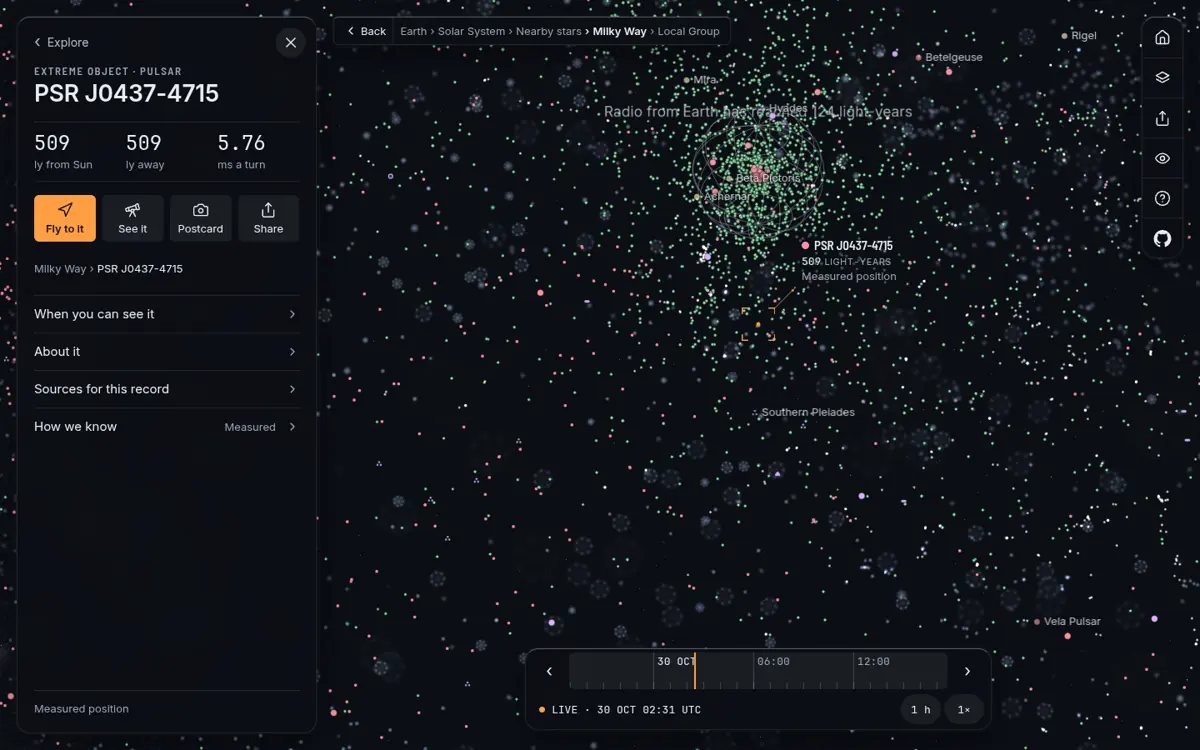
Stars & GalaxiesStars with no distance, 4 383 pulsars and the farthest galaxy
Release 1.5.0 fills the sky with what the catalogues know, and says on every card how a distance was found, or that it never was.
The Space Radar journal
Field notes from Space Radar, the free, open-source 3D map of everything in orbit: satellites, stations, planets and stars. Every story ends on the map, so you can go and look.
Newest story
Stars & GalaxiesRelease 1.5.0 fills the sky with what the catalogues know, and says on every card how a distance was found, or that it never was.
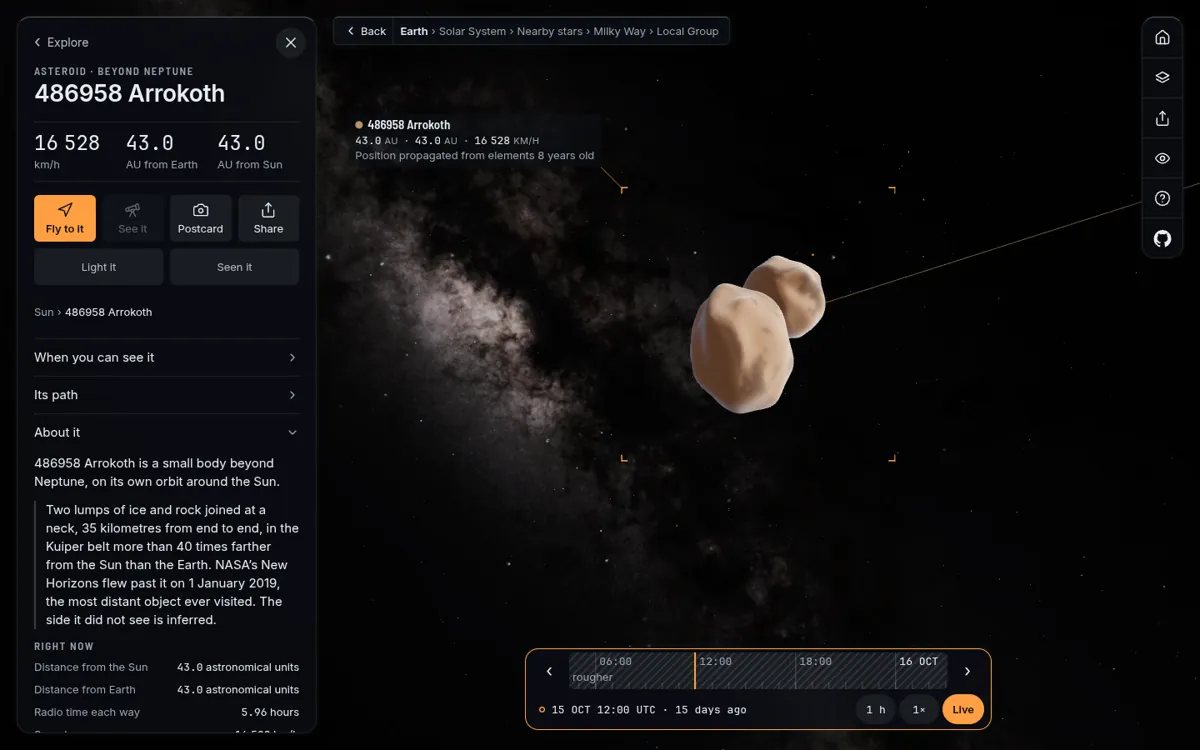
Release 1.5.0 replaces the generic rock with the shapes spacecraft and radar measured for eleven small bodies, and says on every card what was seen.
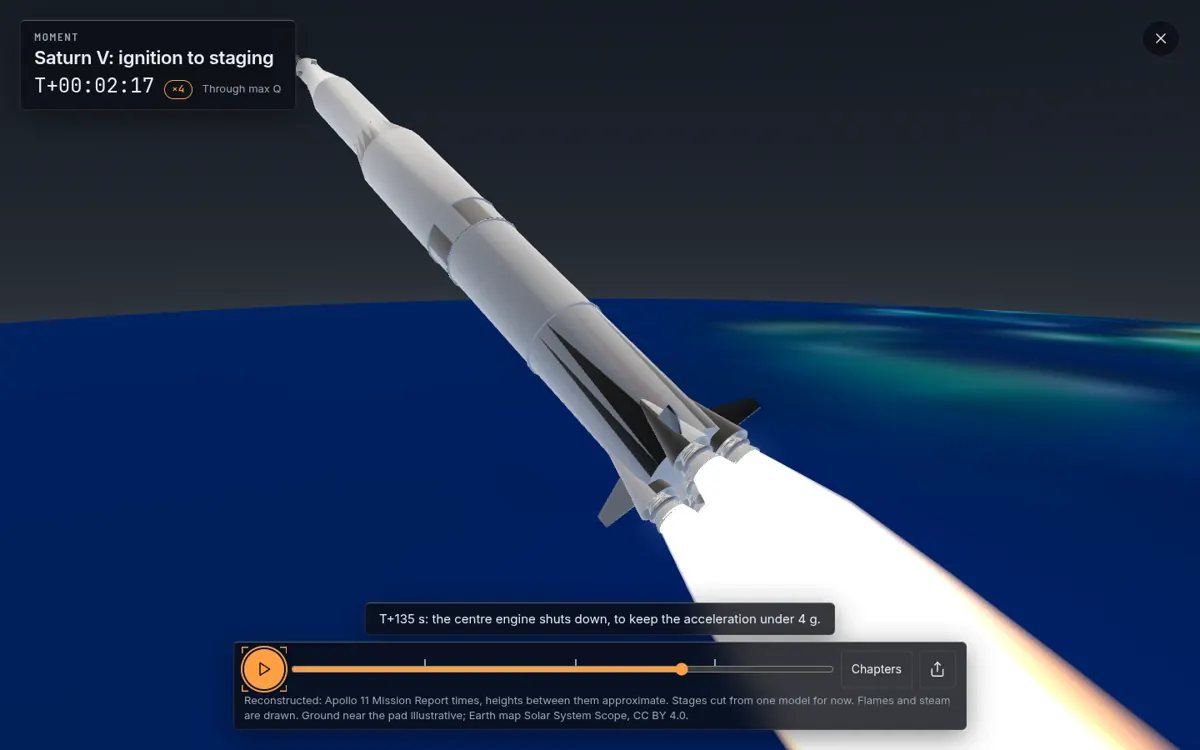
Release 1.5.0 adds a new kind of tour, a Moment, and its first demonstration: Apollo 11's Saturn V from ignition to the jettison of the escape tower.
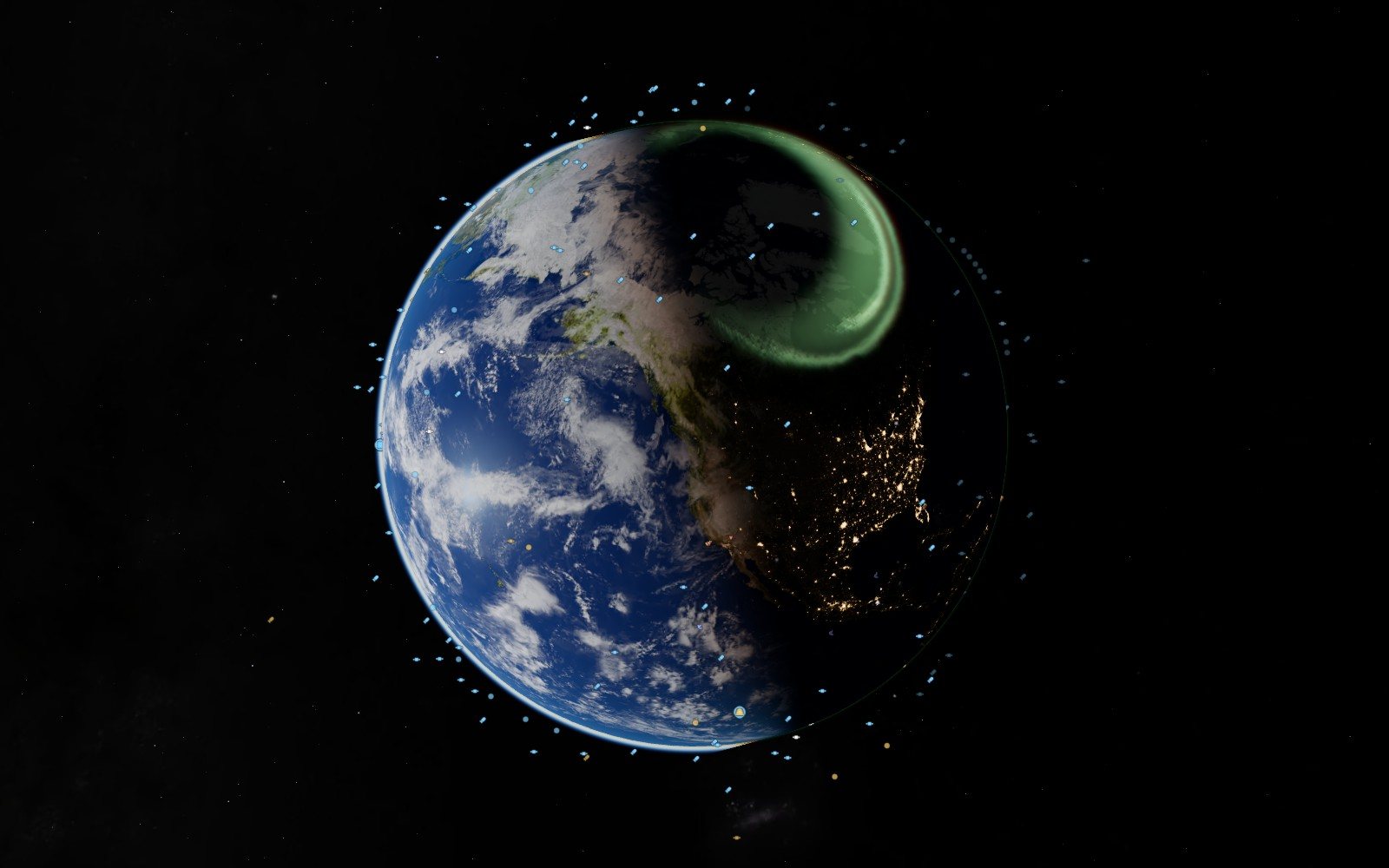
Nearly half the world’s schools are not online. Space Radar is built so that one of them can keep its own copy on an old laptop and teach the sky from it. How that works, what a lesson looks like, and what it honestly cannot do without a network.
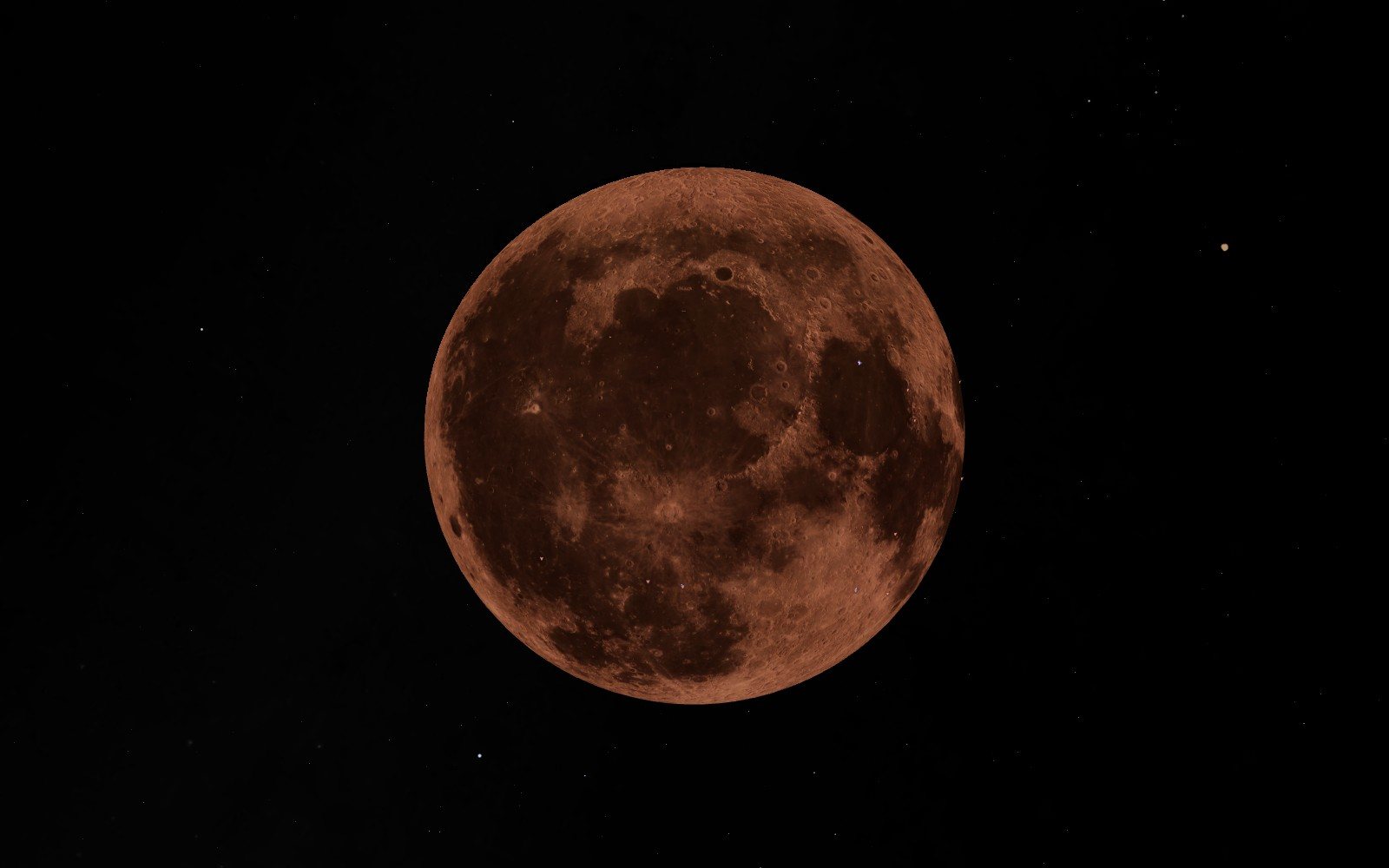
Drag the clock on a map of space and the Moon’s shadow, the seasons and the planets all move to where they will be. The satellites move too, and the map tells you to trust those less. On honest time travel.
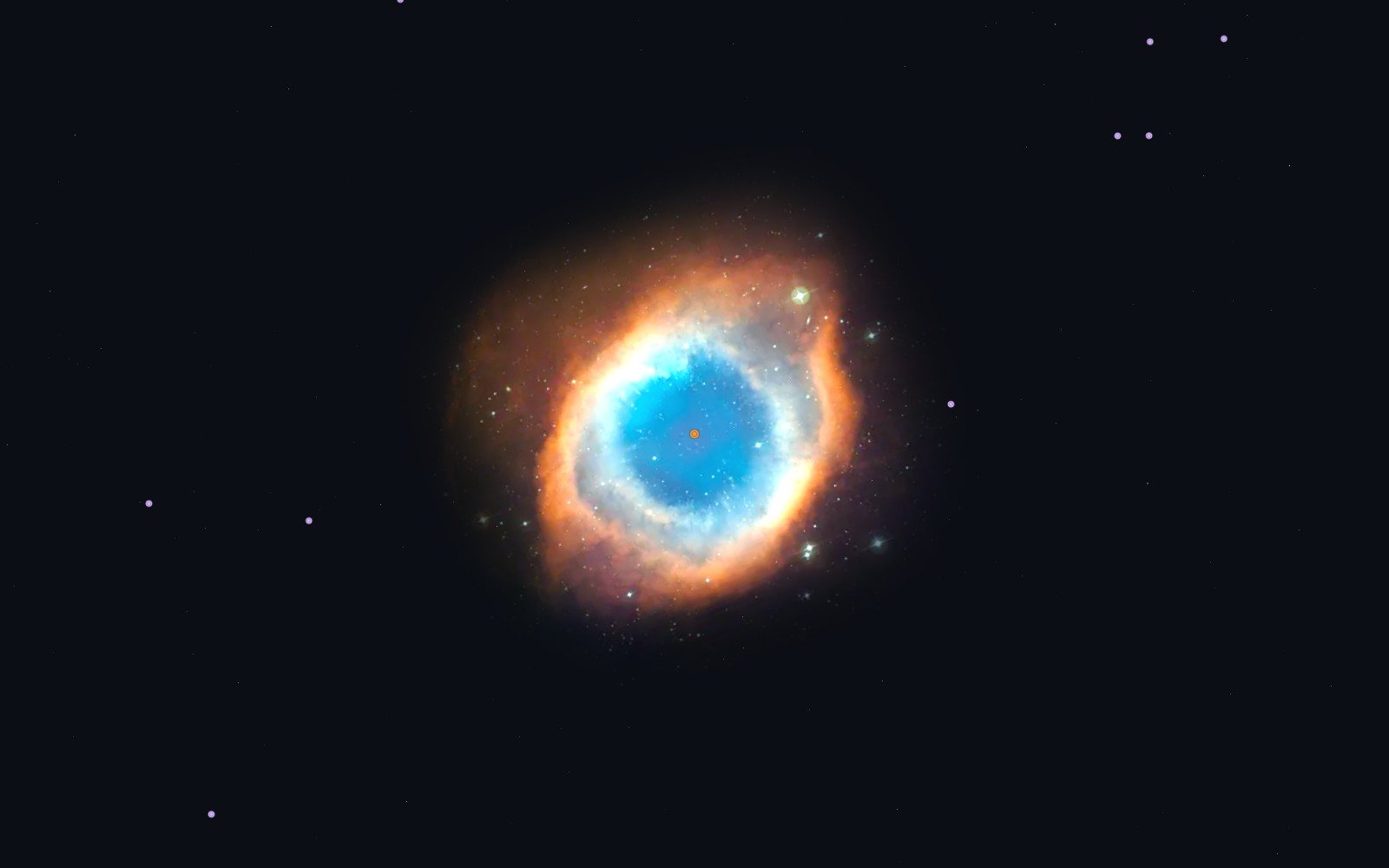
A map with a legend tells you everything at once. A guide tells you one thing, then the next. On the 26 narrated trips in Space Radar, how they are written, and three of them retold.
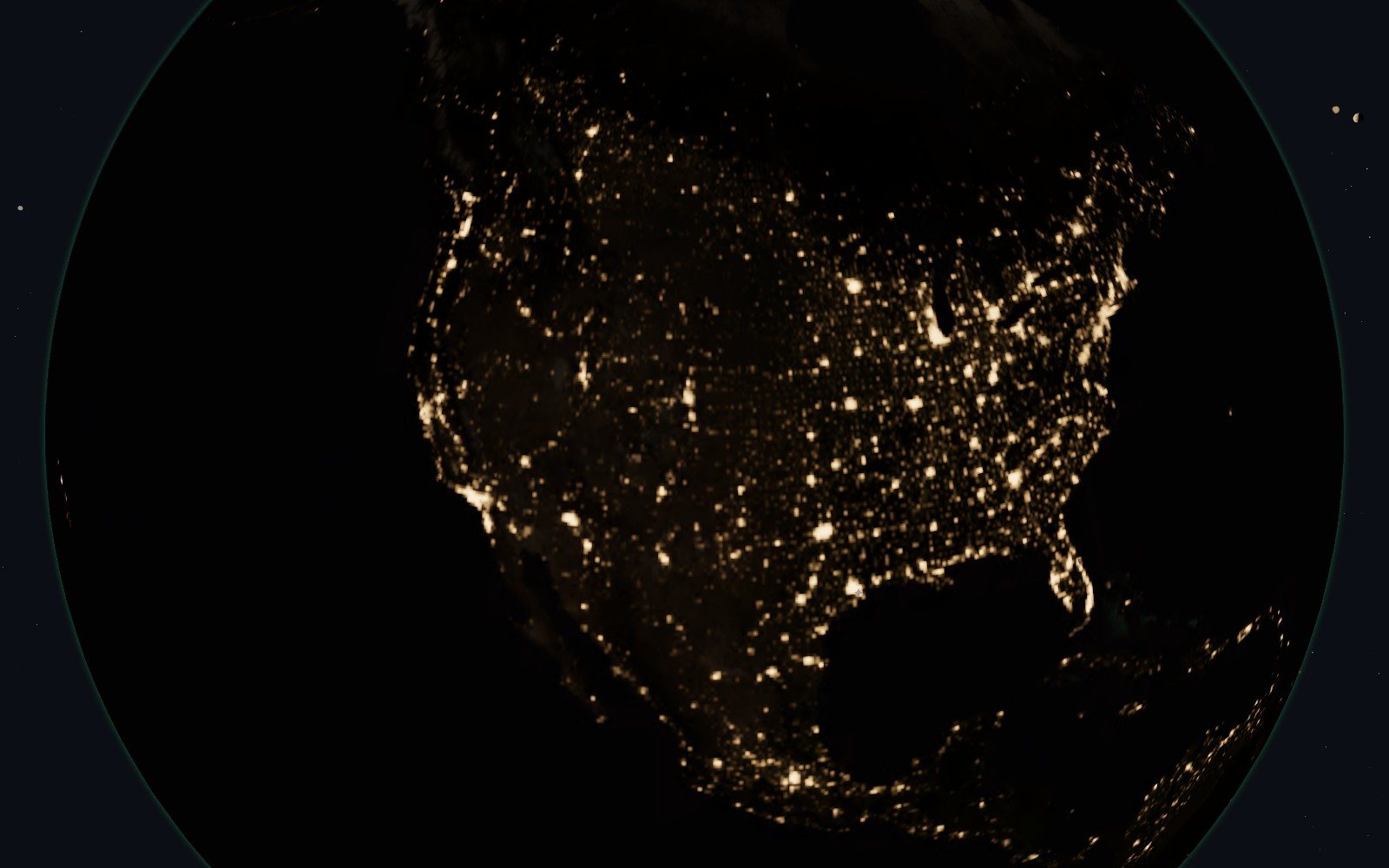
What is in the sky tonight, seen from an ordinary city balcony, is a short list. Almost nobody is taught it any more. It takes one evening to learn.
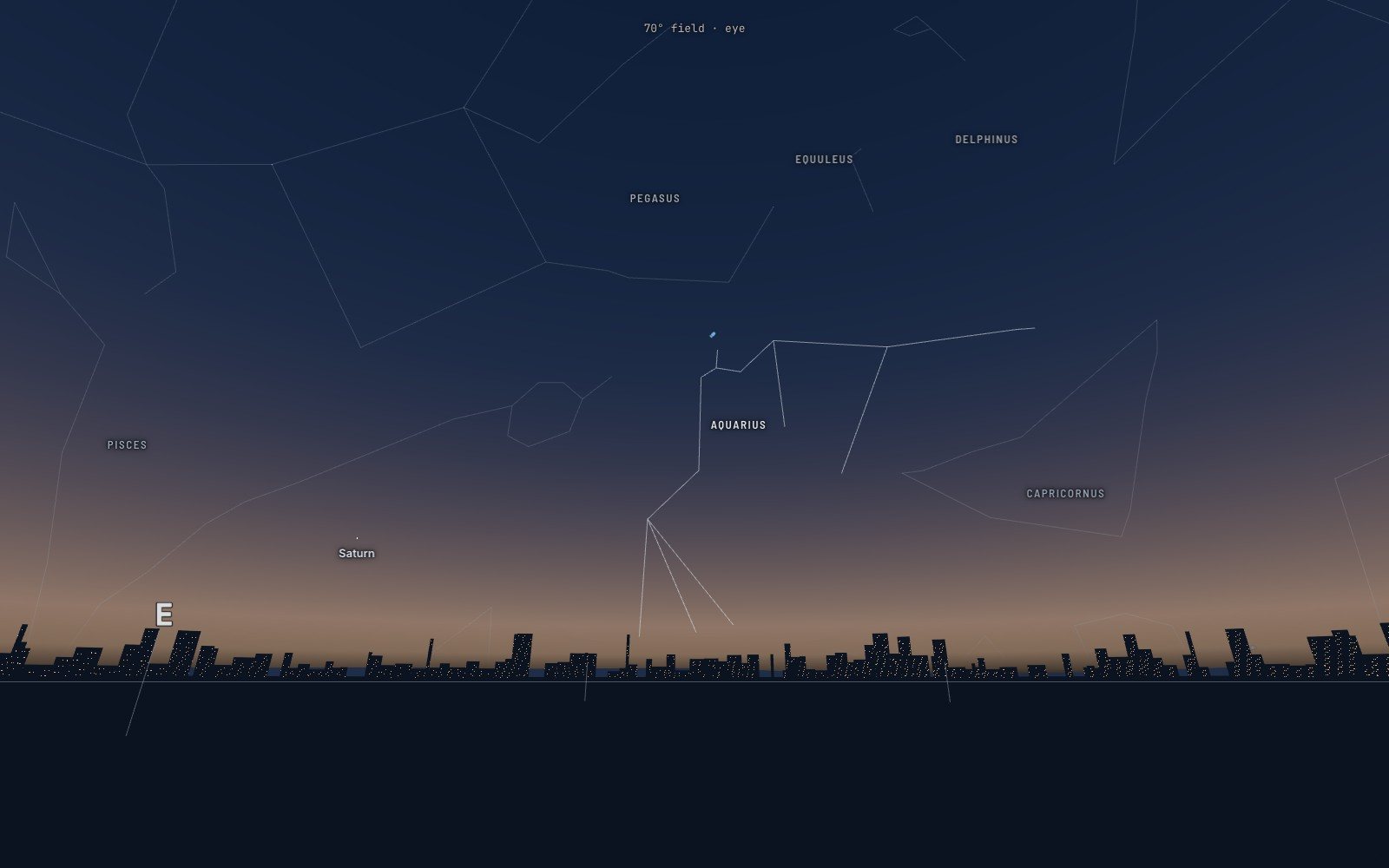
Most sky apps assume you know the constellations. The Tonight view in Space Radar assumes you know which way is south. What it works out for one street on one evening, and what it admits it cannot know.
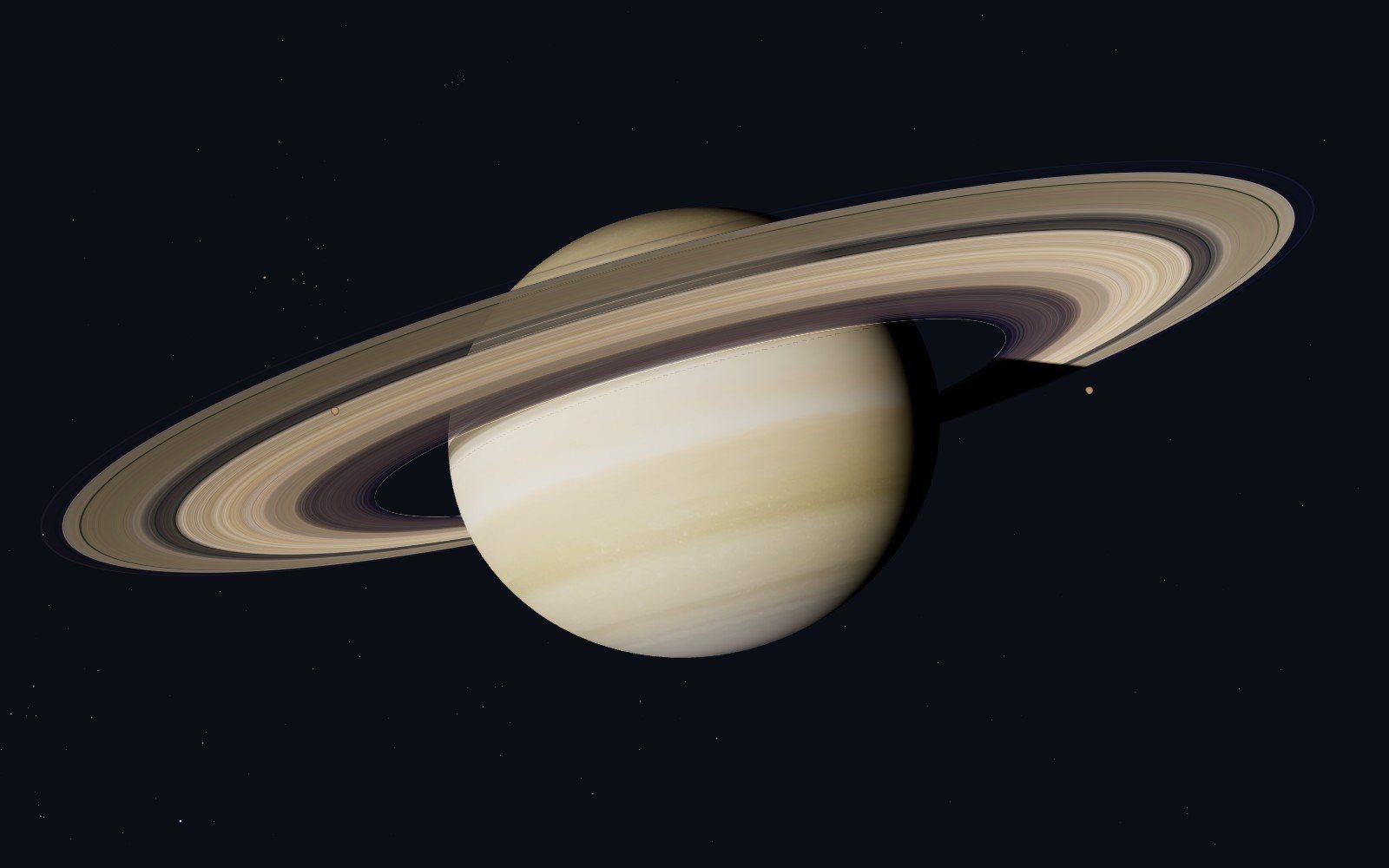
Space Radar draws everything in orbit where it really is, for people who have never heard of an orbital element. Why I think a map of space has to be honest and kind at once, what that costs, and why it is free and open.
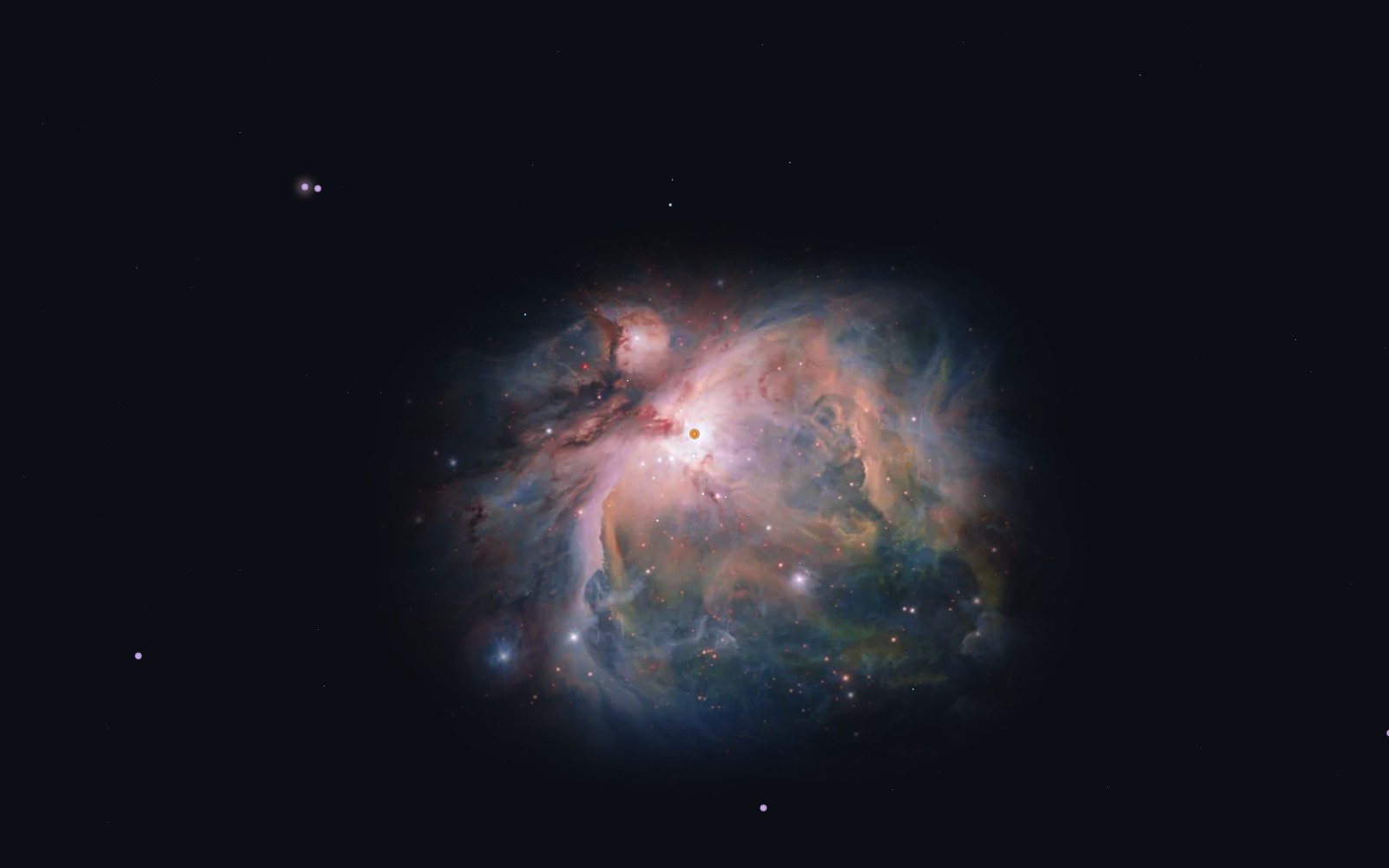
A map of space is a pile of other people’s measurements. Who made them, how old they are, which parts are computed, which are photographs and which are honest drawings, and how to send a correction when one of them is wrong.
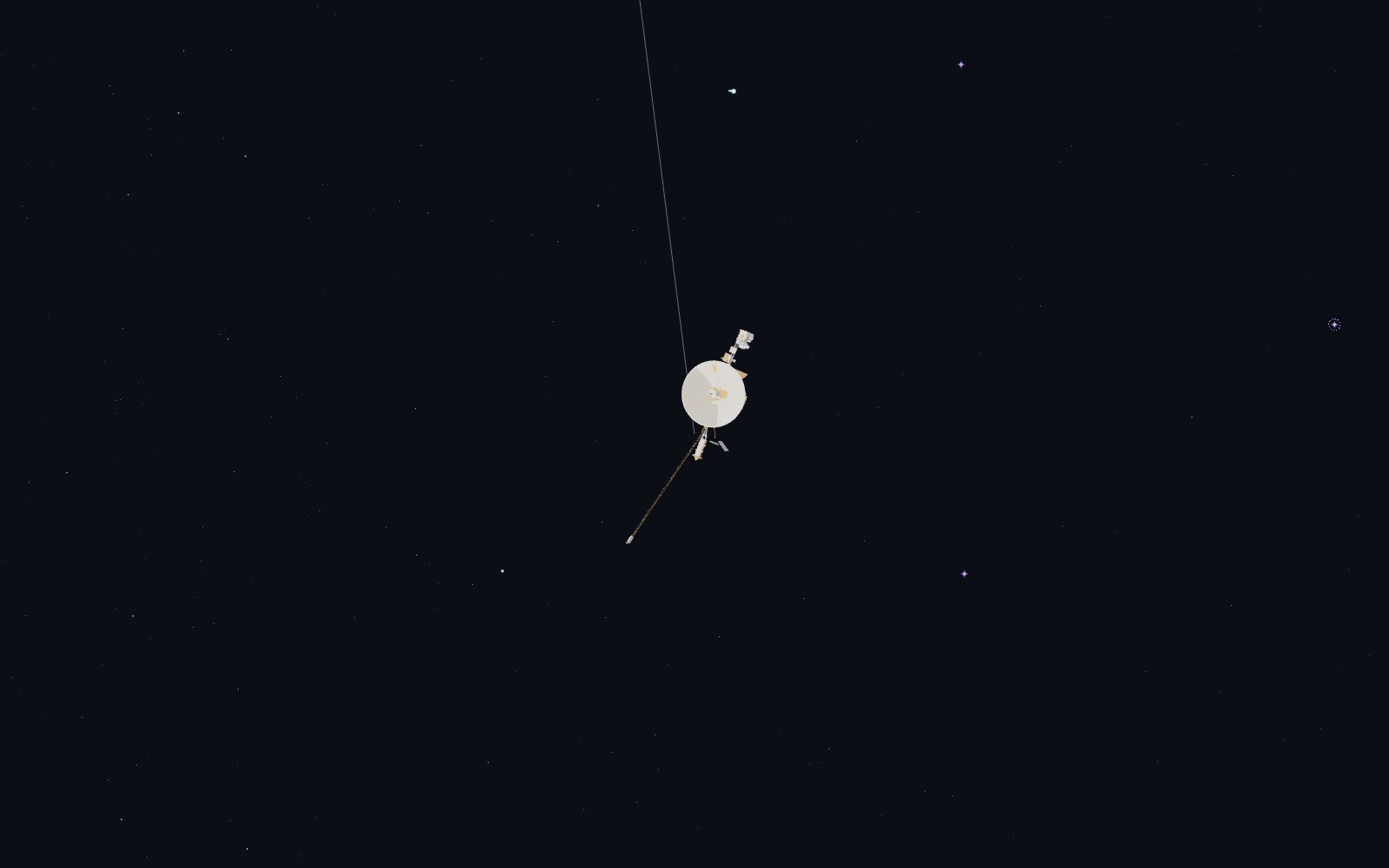
Where is Voyager 1 now? Almost exactly one day away at the speed of light, and still answering. A short tour of the farthest things people have thrown, and of the people who never stopped listening.
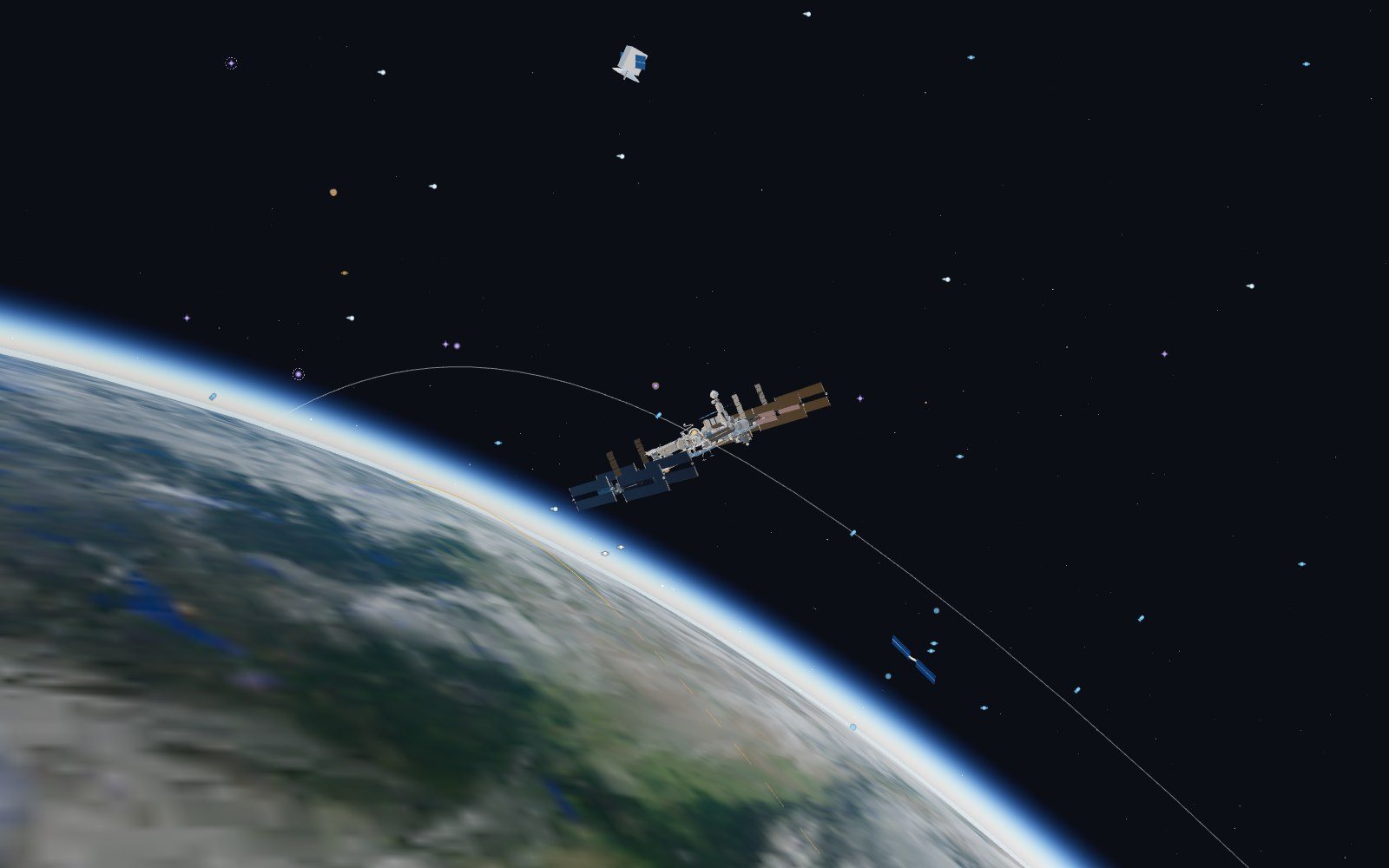
Ten people live off the planet this week, in exactly two homes. What their days are like, why the stations fly where they do, how to watch one cross your own street, and what happens when the bigger one comes down.
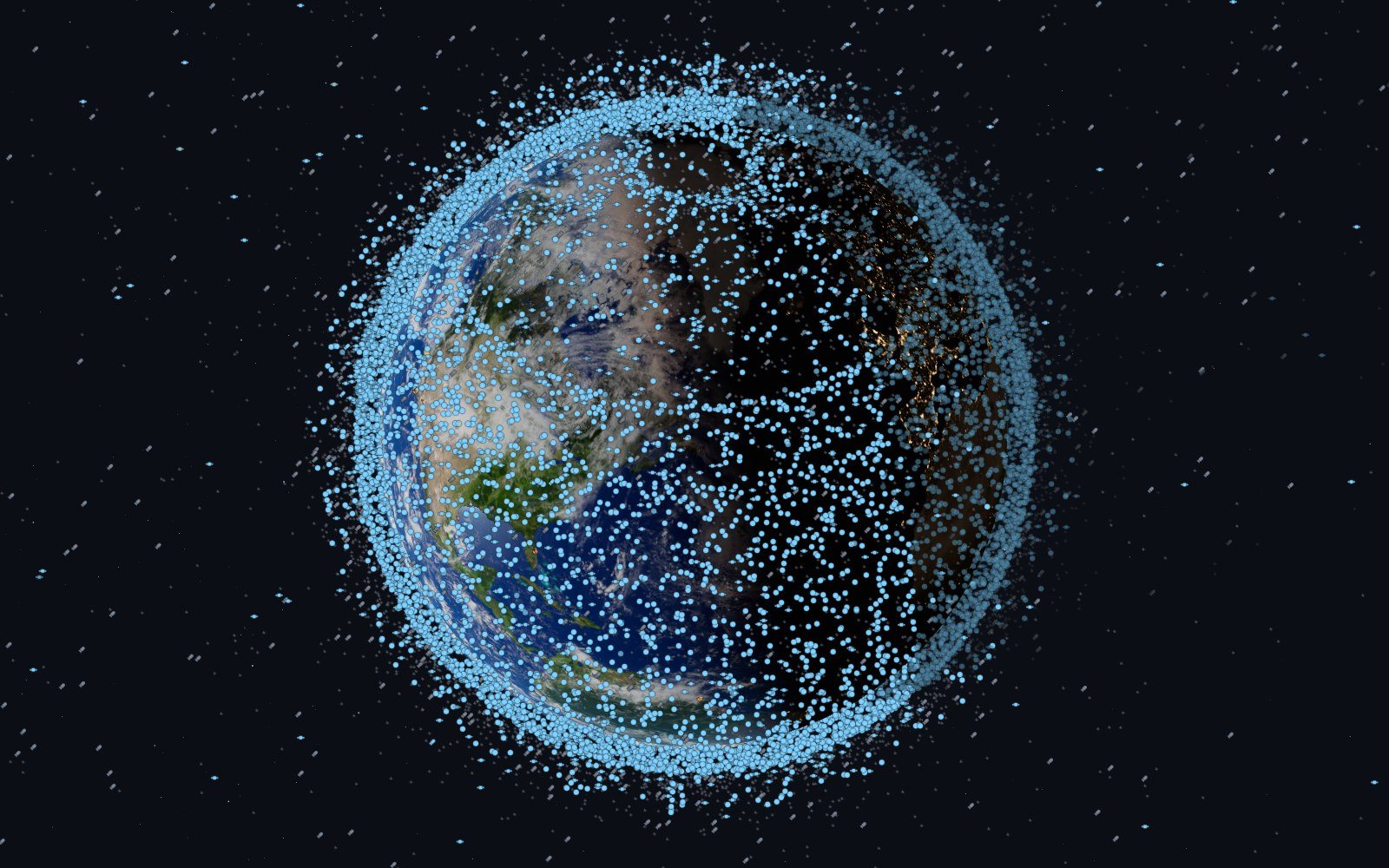
About seventeen thousand working machines, and at least as many dead ones, share the space a few hundred kilometres over your head. How it filled up in one lifetime, who keeps the list, what a collision looks like, and why it reaches your weather forecast.