
Where is the ISS right now? Two addresses in the sky
Ten people live off the planet this week, in exactly two homes. What their days are like, why the stations fly where they do, how to watch one cross your own street, and what happens when the bigger one comes down.
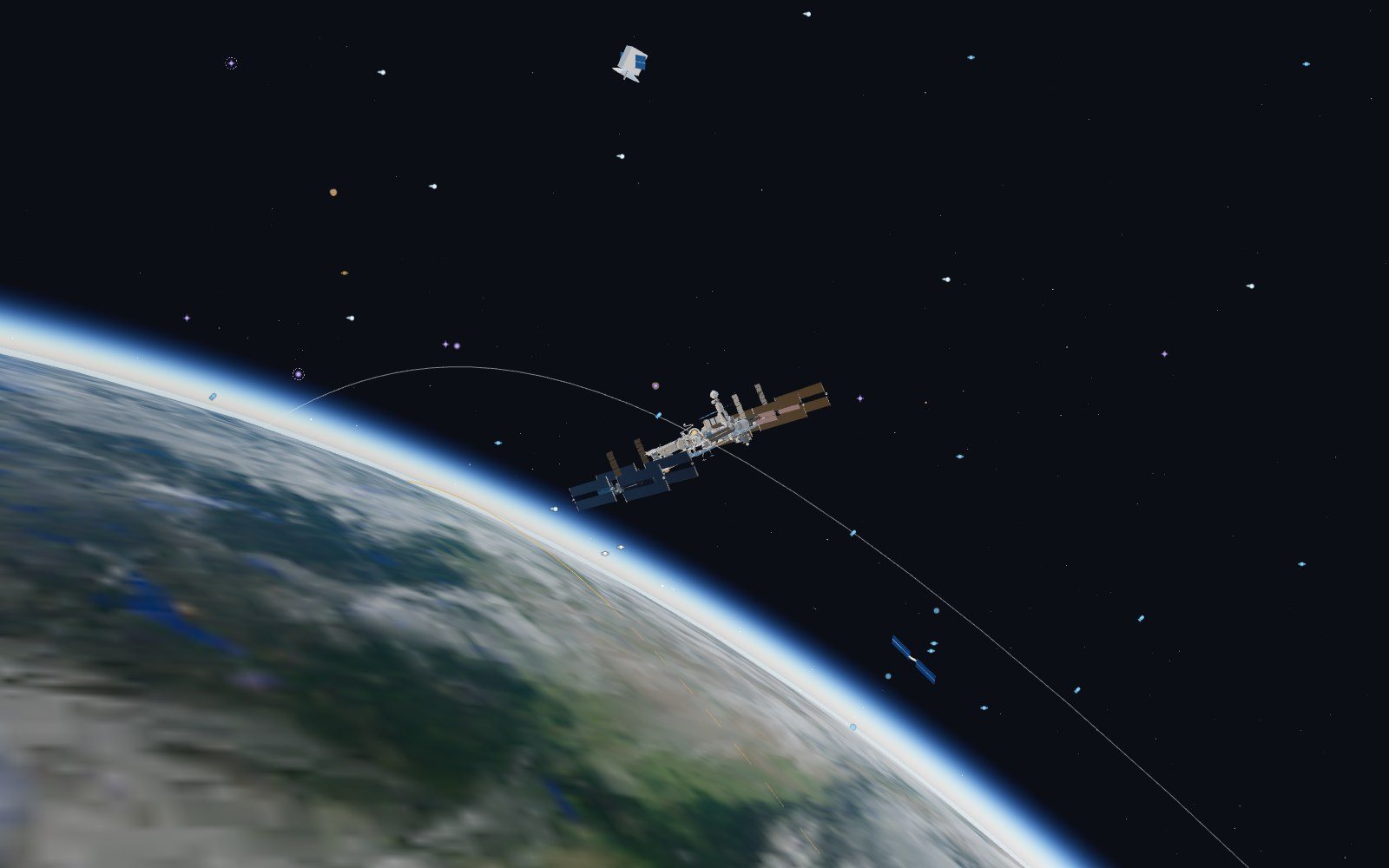
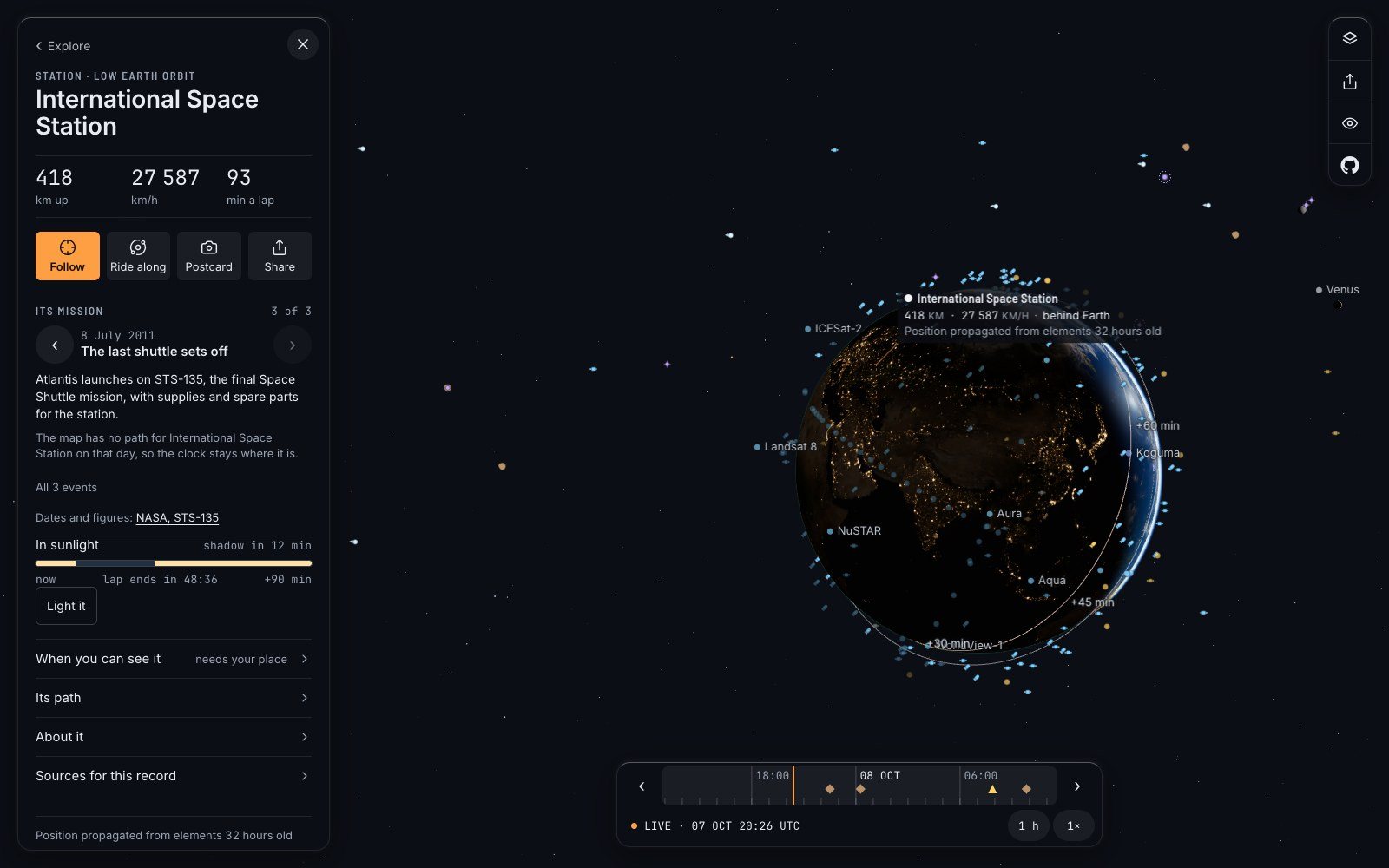
The International Space Station at its computed position. It is 109 metres from end to end and weighs about 420 tonnes; from the ground it is a single moving point of light.
On the morning of 7 October 2026, four people closed a hatch, strapped themselves in and let go of their home. Their capsule, a SpaceX Dragon, backed slowly away from the International Space Station while both were travelling at about 28,000 kilometres an hour. NASA’s Jessica Meir and Jack Hathaway, the European Space Agency’s Sophie Adenot and the Russian cosmonaut Andrey Fedyaev were due to splash down off California the next day.
Ask where the ISS is right now and the honest answer is “somewhere else already”: it covers about forty kilometres in the time it takes to read this sentence. But the question underneath is a better one. Once that capsule is down, seven people are left on the station. A little lower, and usually thousands of kilometres away, three more are spending an ordinary week on China’s Tiangong. That is the whole of humanity that is not on the Earth as I write: ten people, at two addresses.
There has been at least one such address, with someone home, every day since 2 November 2000. This piece is about those two homes: what a day in them is like, why they fly where they do, how you can stand in your own street and watch one go over, and what it means that the larger of the two already has a demolition date.
A six-bedroom house at eight kilometres a second#
Start with the larger one. NASA describes the station’s living space as bigger than a six-bedroom house: six sleeping quarters, two bathrooms, a gym and a bay window. The whole structure is 109 metres from end to end, one yard short of an American football field, and it has a mass of about 420 tonnes. Its first piece, a Russian-built module called Zarya, was launched on 20 November 1998. The first residents, Bill Shepherd, Yuri Gidzenko and Sergei Krikalev, moved in two years later and nobody has turned the lights off since.
It flies between 370 and 460 kilometres up. That is a strangely modest number. London to Paris is about 340 kilometres; the station is roughly that far away, straight up. What makes it a spacecraft and not a very tall tower is the sideways speed: about eight kilometres a second, which would take you from London to New York in twelve minutes. At that pace it circles the planet roughly every ninety minutes, so the crew see sixteen sunrises and sixteen sunsets in every twenty-four hours.
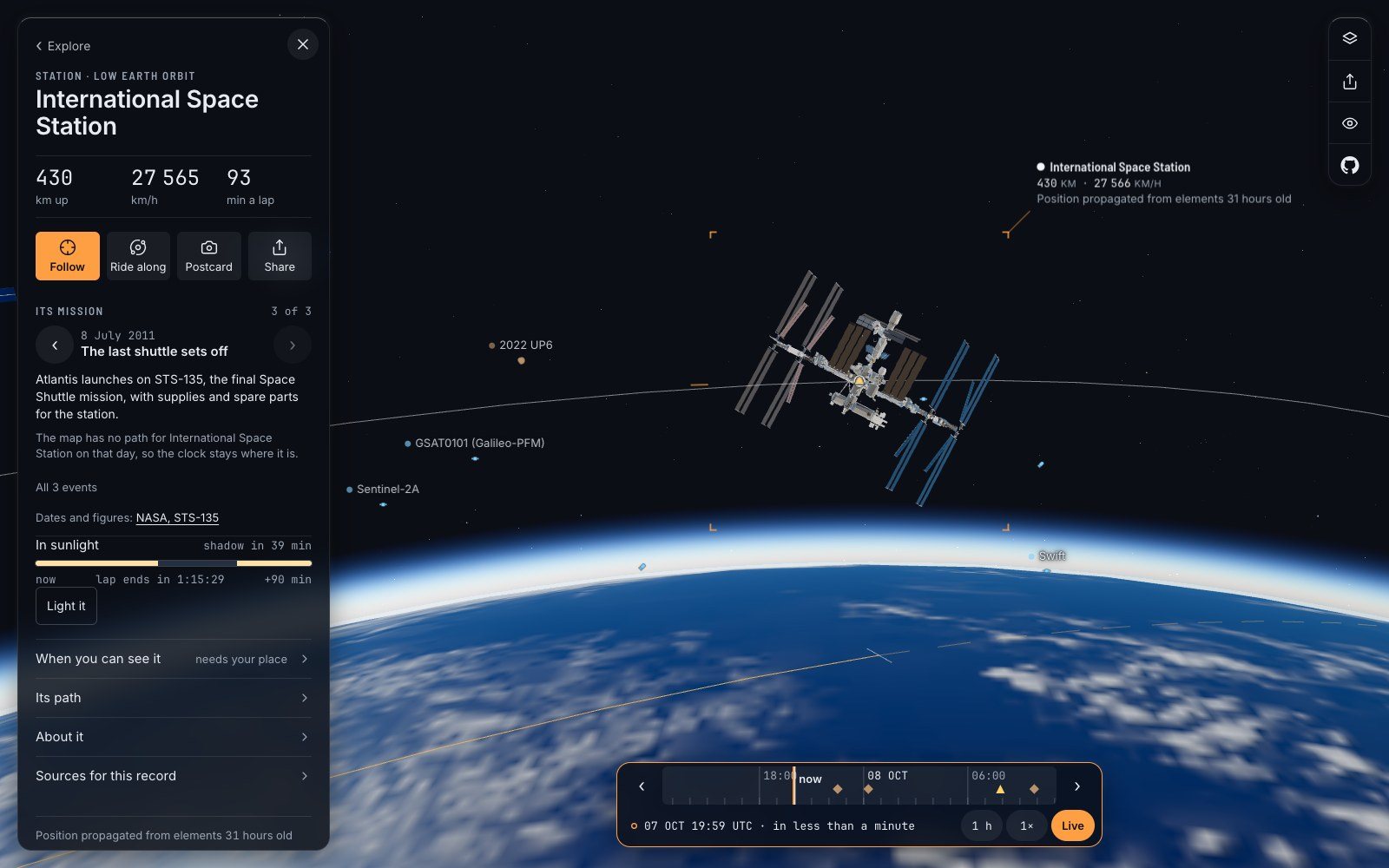
I have been watching both stations on Space Radar, a free live map of everything in orbit that draws each object where its published orbit says it is at that second. Open it and you can follow the ISS live: its height, its speed, and a bar that shows whether it is in sunlight or in the Earth’s shadow, which flips twice on every lap.
Life inside is organised around things the ground gives us for free. Water is the clearest example. In 2023 NASA reported that the station’s life-support system had reached 98 percent water recovery: sweat, breath and urine are collected, cleaned and drunk again. Gravity is the other. Without it, weight-bearing bones lose 1 to 1.5 percent of their mineral density a month, so every astronaut exercises for at least two hours a day, strapped to a treadmill or pulling against a machine that stands in for weight.
- 98%of the water on the station is recovered and reused, NASA reported in 2023. The crew’s drinking water has been through the crew before.
Even bread is a problem. Crumbs do not fall; they drift into eyes and air filters. In November 1985 the Mexican astronaut Rodolfo Neri Vela asked for tortillas on his Space Shuttle flight, they made no crumbs, and they have been on the menu ever since. The bay window is real, too. It is called the Cupola, it was built in Europe and attached in 2010, and it has six windows around the sides and one on top that looks straight down at the planet.
The smaller house, and the crack in its window#
The second address is newer and gets a fraction of the attention. Tiangong, which means “heavenly palace”, began with a core module launched on 29 April 2021. Two laboratory modules followed in 2022, and it has been permanently crewed since June of that year. Three people live there at a time, six for a few days when one crew hands over to the next.
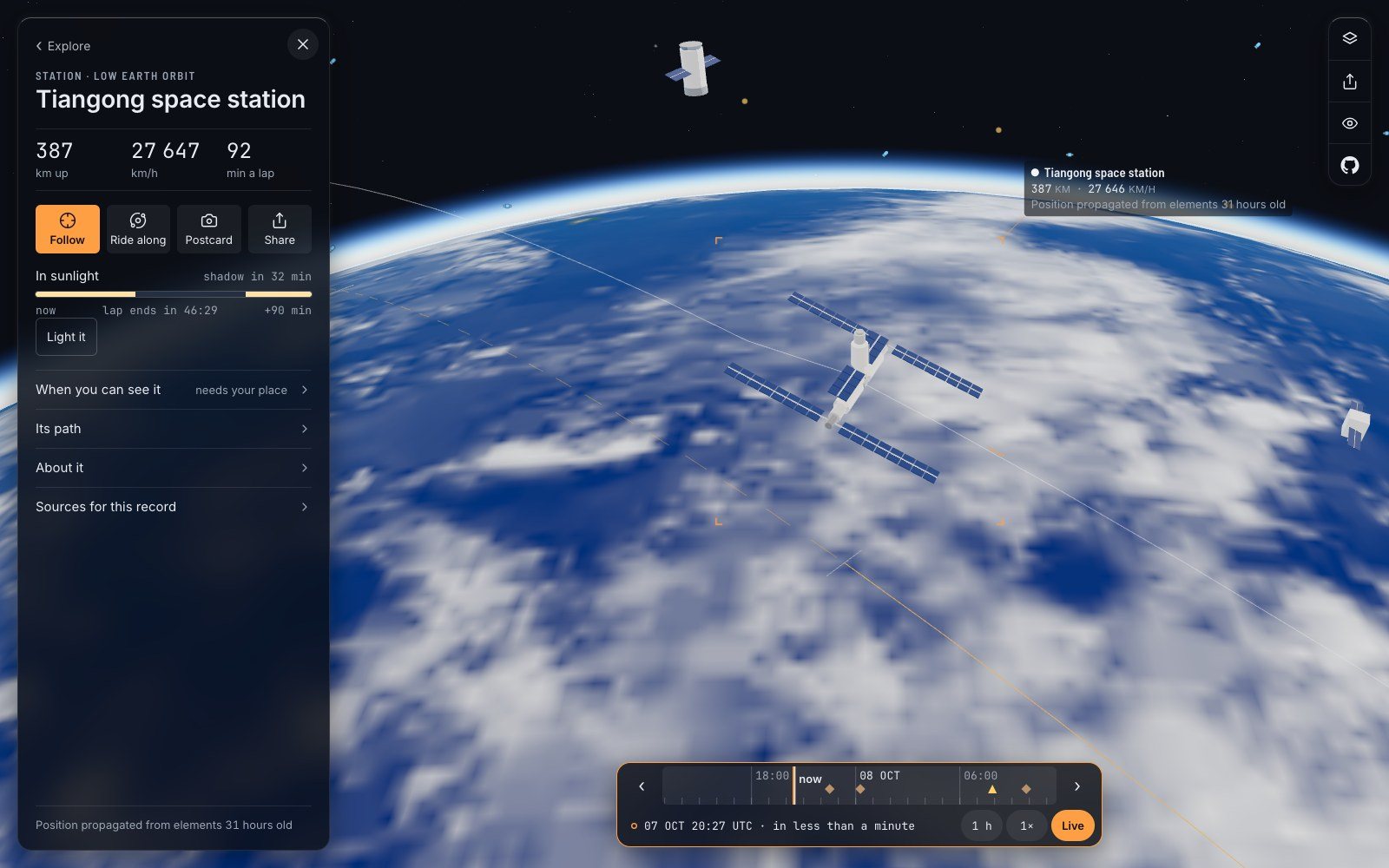
The current residents arrived on the Shenzhou-23 spacecraft on 24 May 2026: commander Zhu Yangzhu, Zhang Zhiyuan, and Lai Ka-ying, the first astronaut from Hong Kong. You can see where Tiangong is at this moment the same way as the ISS.
Tiangong also supplied the most instructive scare of recent years. In November 2025 the crew of Shenzhou-20 were about to come home when tiny cracks were found in a window of their return capsule, most likely from a hit by a piece of space debris. Their return was delayed by more than a week. They finally landed on 14 November in the capsule that had brought their replacements, and China launched an empty spacecraft eleven days later so that the new crew would have a way home.
Nobody was hurt. But it is worth holding on to the picture: a home with three people in it, and outside the window, at ten times the speed of a rifle bullet, other people’s rubbish.
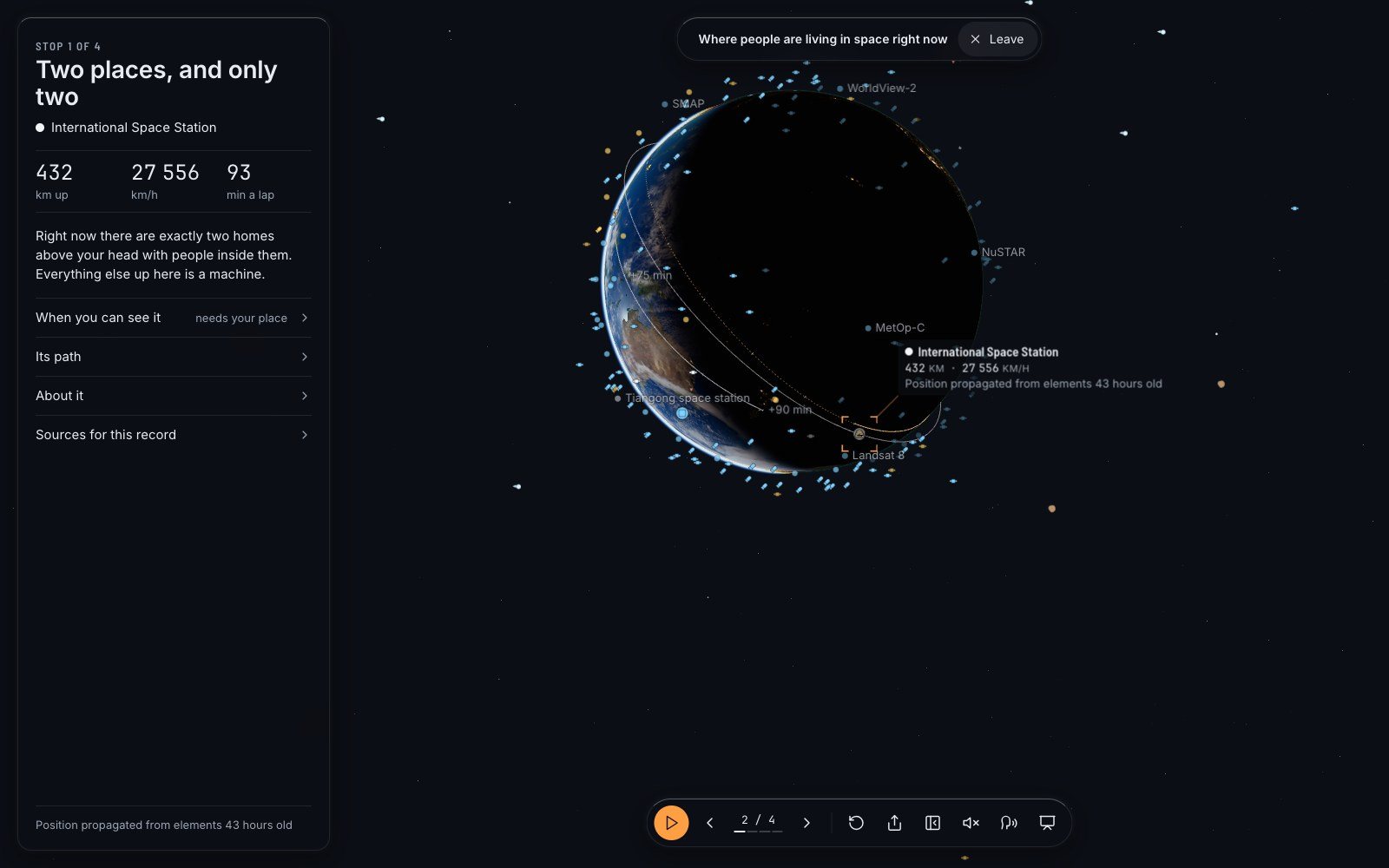
That view opens a short guided trip on the map, the two places where people are living in space right now. It takes a minute and it is the fastest way I know to feel how thin the inhabited layer is.
Why they fly where they do#
Neither station goes round the equator, and neither goes over the poles. The ISS orbit is tilted 51.6 degrees to the equator, and the reason is on the ground in Kazakhstan. The Russian Soyuz and Progress ships that serve the station launch from Baikonur. A rocket fired due east from there would drop its spent stages on China, so Russian launches aim further north, and 51.6 degrees is the lowest tilt they can reach directly. The station was put where both partners could get to it.
The side effect is generous. A steeper tilt means a wider stripe of the planet passes underneath, and NASA says the station’s path covers more than 90 percent of the world’s population. Tiangong, launched from further south, is tilted about 41.5 degrees, so it never passes directly overhead for anyone north of Rome or Chicago, though it can still be seen low in the sky from further north.
The height is a compromise as well. Higher would mean thinner air, but a harder climb for every crew and cargo ship. Lower would mean thicker air. Even at 400 kilometres there is enough of it to slow the station down, so it sinks, and a docked ship regularly fires its engines to push it back up. NASA’s own estimate is that without those boosts the station would stay up for only a year or two.
You can feel the scale of this by going straight up from wherever you are. There is a trip on the map that does exactly that: from your ground to the space station, through the twelve kilometres where the weather is, past the line at a hundred kilometres where space officially begins, and on to the station and its next pass over you.
How to watch a house go over your street#
Here is the part that surprises people: you do not need a telescope, or binoculars, or dark skies. NASA’s own description is that the station looks like an airplane or a very bright star, except that it has no flashing lights and does not change direction. At its best it rivals Venus.
The catch is timing. The station has no lights of its own that you could see; you are looking at sunlight on its solar panels. So it is only visible when it is in sunshine and you are in the dark, which means the few hours after sunset and the few hours before sunrise. A good pass lasts about six minutes. It rises on one side of the sky, climbs, and often fades out in mid-air before it reaches the far horizon, as it slips into the Earth’s shadow.
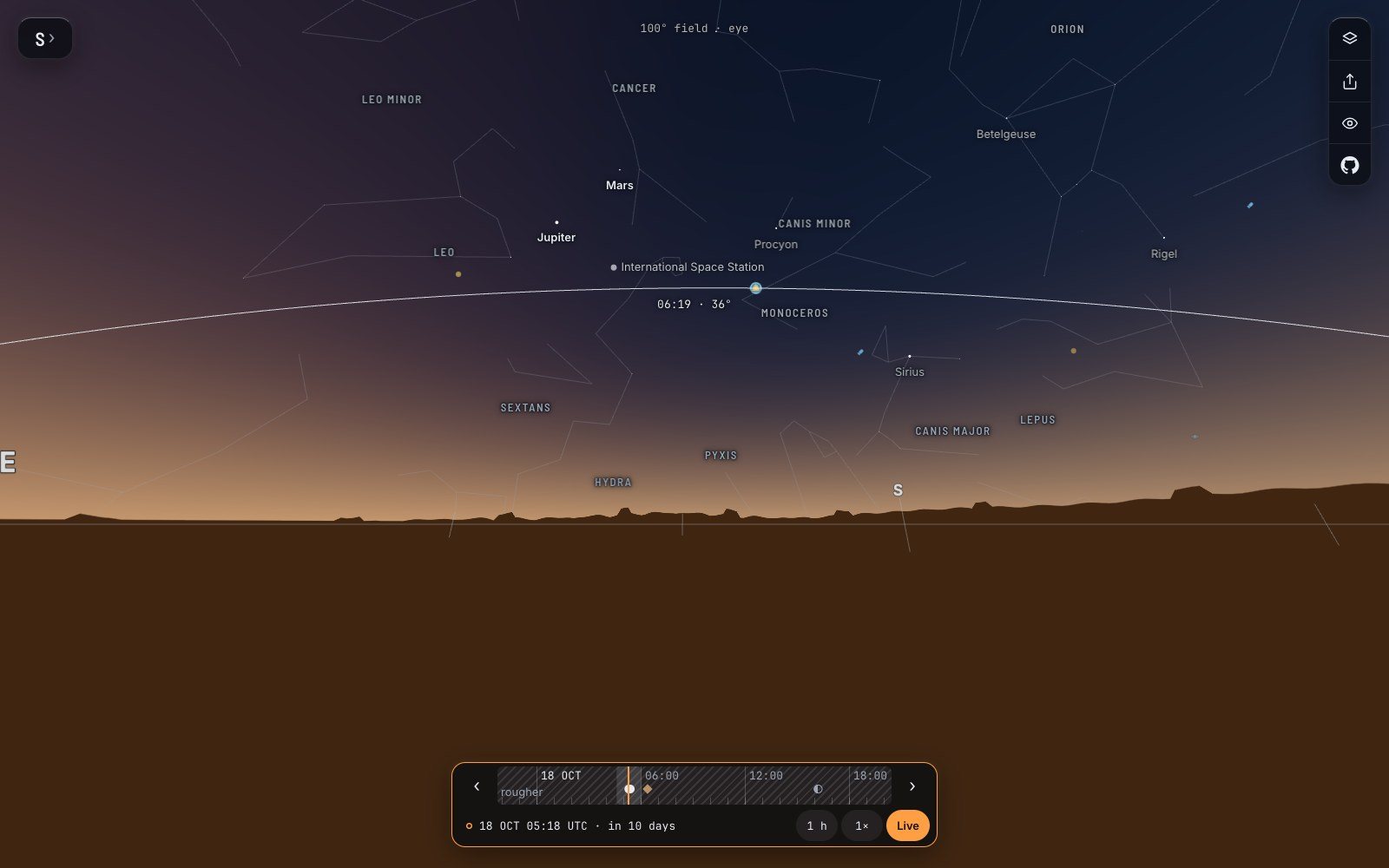
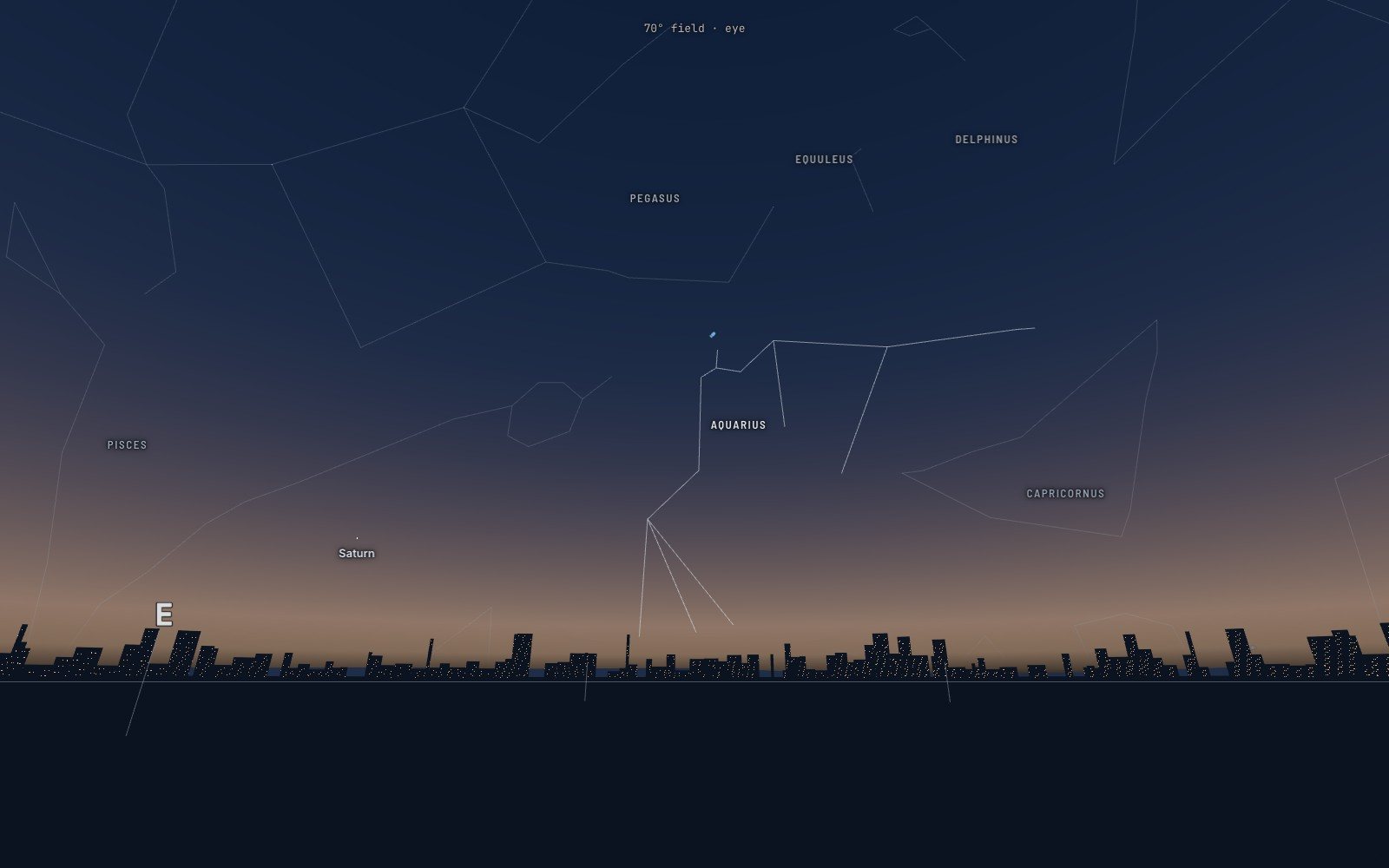
On the map, the “Tonight” view shows the sky from your own street with the passes worked out for the place you choose. Pick the next bright one, go outside five minutes early, and look where it tells you. A steady light that does not blink, moving faster than any plane at cruising height appears to: that is seven people.
The house with a demolition date#
The station’s oldest modules have been in orbit since 1998, and a structure that swings from sunlight to shadow sixteen times a day does not last for ever. NASA plans to operate it until 2030, and in June 2024 it gave SpaceX a contract worth up to 843 million dollars to build the vehicle that will bring it down: a tug that docks, waits, and then pushes 420 tonnes out of orbit on purpose. Russia has committed to the partnership through at least 2028.
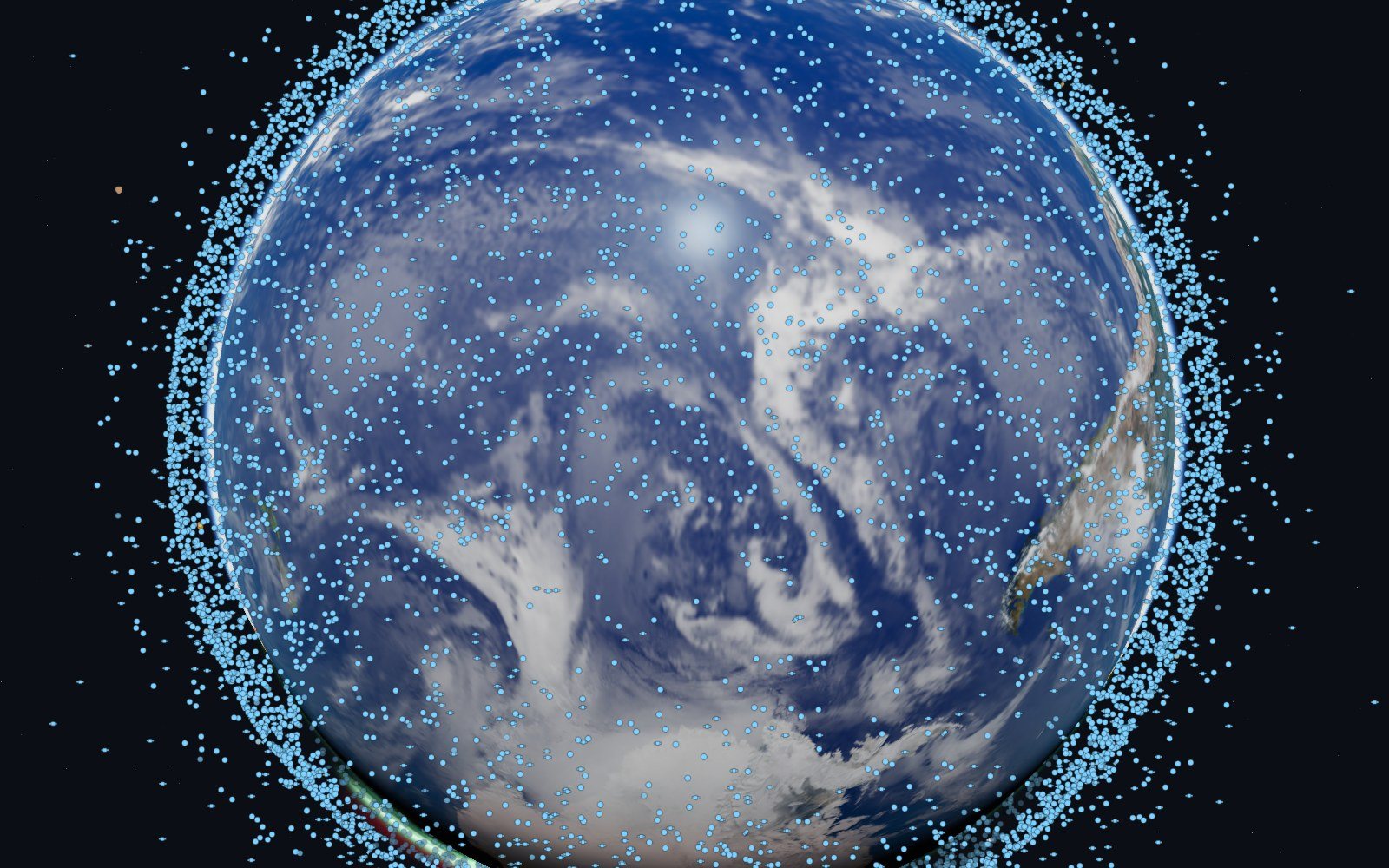
Something that size does not burn up completely, so it has to be aimed. The usual target for large spacecraft is the emptiest stretch of the South Pacific, around a spot called Point Nemo, which is about 2,688 kilometres from the nearest land. Mir, the last great Russian station, came down over the Pacific on 23 March 2001; people in Fiji watched the pieces go over. On the map, the trip about satellites and junk ends by flying to the place where spacecraft come down.
What comes after is less settled than the plan suggests. Several companies are building private stations, but as of October 2026 none of them is flying; the first, a single-module outpost called Haven-1, is not expected to launch before 2027. Some United States senators want the ISS kept until 2032 and not brought down until a successor is working. If the timetable holds and the successors slip, there could be a stretch in the 2030s when the only address in the sky is the Chinese one.
Nobody under twenty-six#
Go back to the date. The first crew launched on 31 October 2000 and opened the hatch on 2 November. NASA marked twenty-five years of continuous human presence on 2 November 2025. There has been no gap.
Anyone younger than twenty-six has never lived a single day on a planet with everybody on it.
It is a small club up there. Fewer than eight hundred people have ever flown above a hundred kilometres; more than 290 of them, from 26 countries, have visited the ISS. The largest number ever in orbit at one moment is nineteen. For almost everyone, the closest we will get is the view from the pavement.
So take it. Find out when the next pass is over your town. Go out a few minutes early, let your eyes settle, and face the direction you were given. When a bright, steady light climbs out of the rooftops and sails across without a sound, remember what it is: a house, with the lights of the Sun on it, and people inside who are probably having dinner.
Questions people ask
How many people are in space right now?
As of the second week of October 2026, ten: seven on the International Space Station and three on China’s Tiangong. It rises for a few days whenever crews hand over.
Where is the ISS right now?
It is 370 to 460 kilometres above the Earth and circles the planet about every ninety minutes, so its position changes by roughly eight kilometres every second. A live ISS tracker computes the spot from its published orbit.
Can I see the ISS without a telescope?
Yes. It looks like a very bright star moving steadily across the sky, with no flashing lights. It is visible for a few minutes at a time in the hours after sunset or before sunrise, when it is in sunlight and you are in the dark.
When will the ISS be brought down?
NASA plans to operate the station until 2030 and then steer it into a remote part of the ocean using a vehicle built by SpaceX. The exact date depends on its partners and on whether commercial stations are ready.
Sources
- An airplane or a very bright star nasa.gov
- More than 90 percent of the world’s population nasa.gov
- 98 percent water recovery nasa.gov
- The vehicle that will bring it down nasa.gov
- Nasa.gov: nasas spacex crew 12 undocks in dragon for ride home nasa.gov
- Nasa.gov: crew 12 ready to depart as new residents begin advanced health research nasa.gov
- Nasa.gov: expedition 75 nasa.gov
- Cmse.gov.cn cmse.gov.cn
- En.wikipedia.org: Shenzhou 23 en.wikipedia.org
- Nasa.gov: expedition 1 nasa.gov
- Nasa.gov: the international space station marks 25 years of continuous human presence nasa.gov
- Nasa.gov: zarya module nasa.gov
- Nasa.gov: international space station nasa.gov
- Nasa.gov: the human body in space nasa.gov
- Nasa.gov: space station 20th food on iss nasa.gov
- Esa.int: Cupola esa.int
- En.wikipedia.org: Tiangong space station en.wikipedia.org
- Ria.ru: kitay 2094450970 ria.ru
- Pbs.org: chinese astronauts return from space station after delay blamed on space debris damage pbs.org
- Spacenews.com: shenzhou 22 docks at tiangong space station resolving human spaceflight emergency spacenews.com
- Orbitaldebris.jsc.nasa.gov: faq orbitaldebris.jsc.nasa.gov
- Spaceflight.nasa.gov spaceflight.nasa.gov
- Nasa.gov: faqs the international space station transition plan nasa.gov
- Nasa.gov: spot the space station over your backyard with new nasa service nasa.gov
- Oceanservice.noaa.gov: nemo oceanservice.noaa.gov
- Nasa.gov: 20 years ago space station mir reenters earths atmosphere nasa.gov
- Payloadspace.com: vast delays haven 1 launch to 2027 payloadspace.com
- Scientificamerican.com: nasa must delay deorbiting the iss u s lawmakers say scientificamerican.com
- En.wikipedia.org: Astronaut en.wikipedia.org
- Nasa.gov: space station visitors by country nasa.gov
Explore on Space Radar
Keep reading
Moments: a mission replayed in 3D on one clock
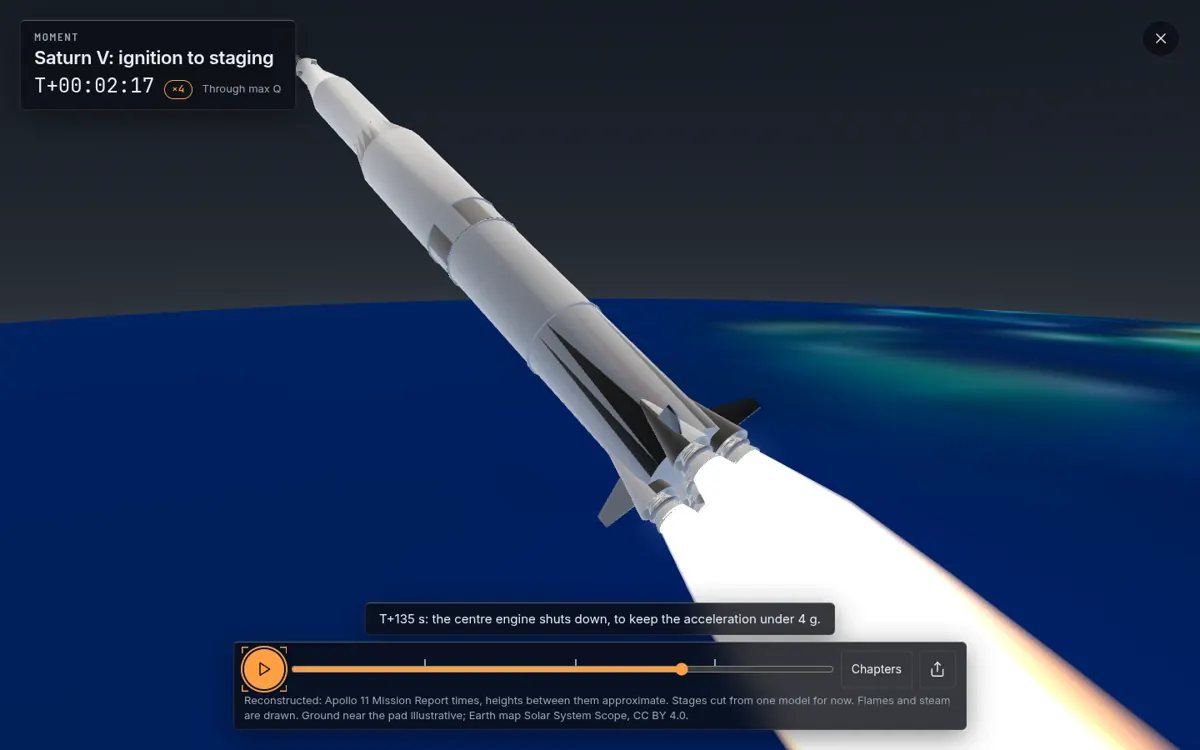
Release 1.5.0 adds a new kind of tour, a Moment, and its first demonstration: Apollo 11's Saturn V from ignition to the jettison of the escape tower.
ISS pass tonight? Ask the sky over your own street
Most sky apps assume you know the constellations. The Tonight view in Space Radar assumes you know which way is south. What it works out for one street on one evening, and what it admits it cannot know.
Stars with no distance, 4 383 pulsars and the farthest galaxy
Release 1.5.0 fills the sky with what the catalogues know, and says on every card how a distance was found, or that it never was.