
Every Orbital Launch Since 1957: 7 223 Attempts on One Map
From Sputnik 1 to last week, every attempt to reach orbit is now in a table you can sort, filter and replay on the globe. Here is what sixty-nine years of launches look like when you count them all: the Soviet decades, the quiet 2000s, and a curve that has gone nearly straight up since 2020.
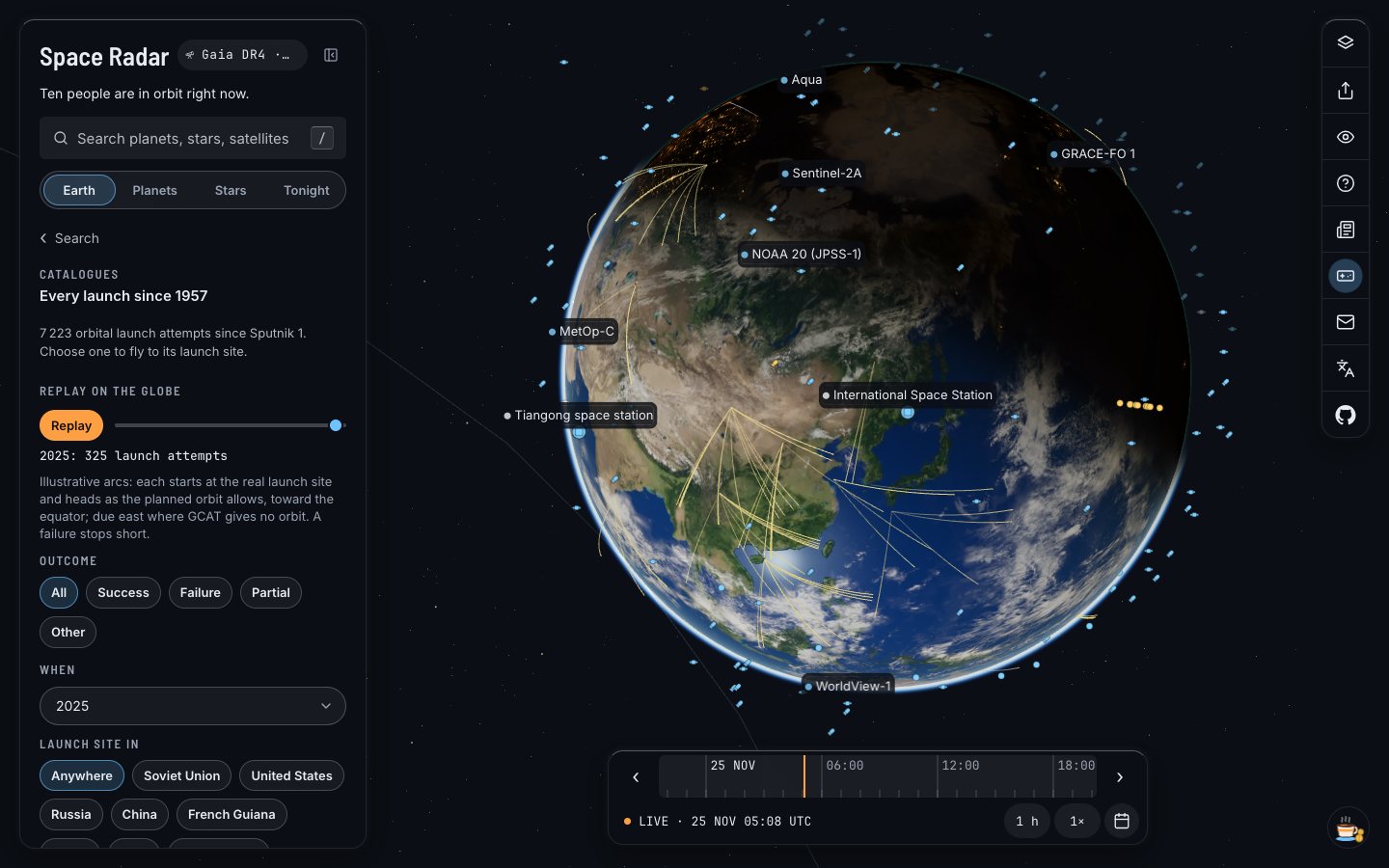
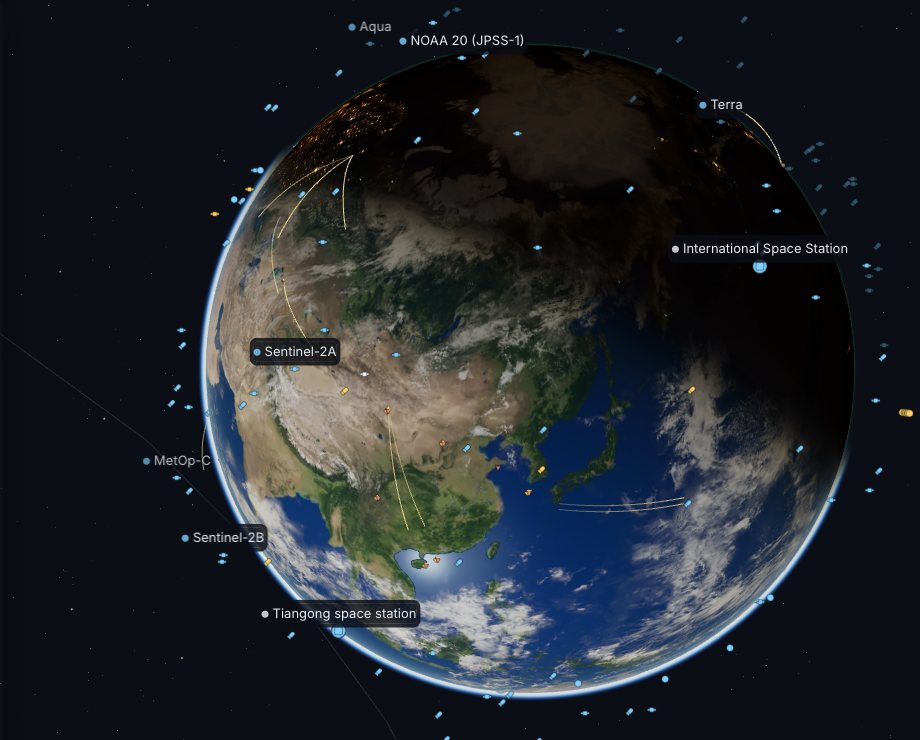
The launch archive at 2025, the busiest year so far: 325 attempts. From this side of the globe most of the arcs are China’s. The arcs show direction, not real trajectories. Space Radar (MIT). Launches: GCAT, Jonathan C. McDowell (CC BY 4.0).
Since Sputnik 1 left Baikonur on 4 October 1957 there have been 7 223 attempts to put something into orbit around the Earth. That is the count in GCAT, the catalogue kept by the astronomer Jonathan McDowell, in the copy Space Radar read on 23 November 2026, and its newest row is a Falcon 9 from Vandenberg on 22 November. Of those attempts 6 666 succeeded and 425 failed; the rest were partial successes, explosions on the pad and pad aborts. The busiest year was 2025, with 325.
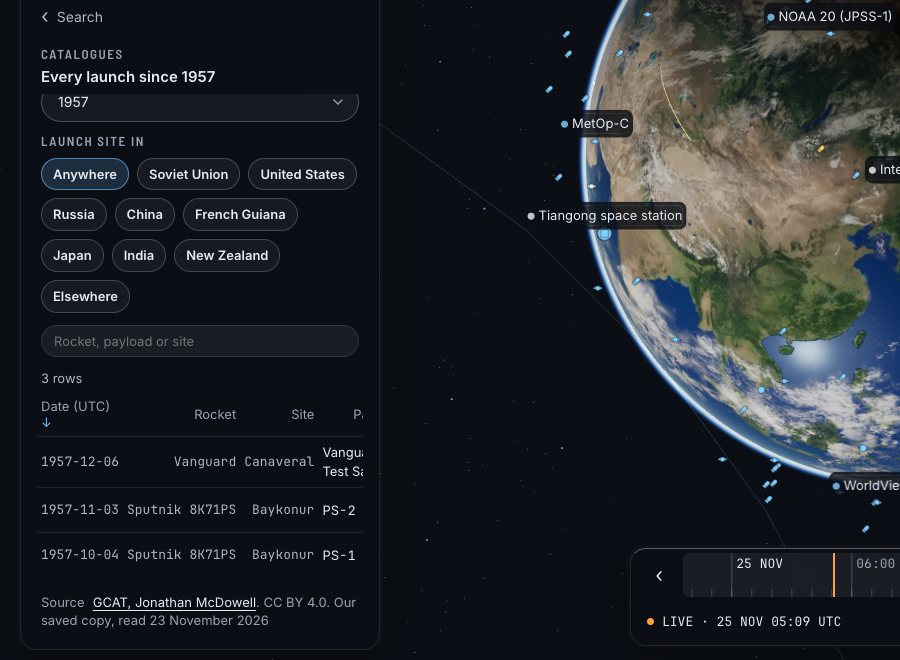
All of them are now in Space Radar’s launch archive: a table you can sort and filter, a page for every year, and a replay that draws each year’s launches as arcs on the 3D globe. This article is what we found when we counted.
- 7 223orbital launch attempts from 4 October 1957 to 22 November 2026
- 92 %succeeded: 6 666 of them, by GCAT’s outcome codes
- 325attempts in 2025, the busiest year, more than double any year before 2021
- 1 689launched from Plesetsk in northern Russia, the busiest site of all
Where the numbers come from#
GCAT, the General Catalog of Artificial Space Objects, is a list of everything people have launched, kept by one astronomer and published openly under the CC BY 4.0 licence. Its launch list has 76 041 rows, most of them sounding rockets and missile tests that went up and came straight down. We keep only the orbital attempts, the rows whose launch code starts with O, and change nothing in them: the date as GCAT gives it (to the second, the minute or just the day), the rocket, the site and pad, the payload and the outcome.
The outcome is GCAT’s too. S is a success, F a failure, E an explosion on the pad before launch, which GCAT keeps “for completeness”, and A a pad abort. Two digits after the letter mark a partial result, such as a satellite left in the wrong orbit, with the share GCAT credits it in its reliability counts. The table shows these as “Partial, 75 %”, and its tooltip says how much GCAT credits the launch.
Sixty-nine years in one curve#
The first years were a race between two countries. There were 3 attempts in 1957, 28 in 1958 and 114 by 1965. The United States launched more often than the Soviet Union every year from 1958 to 1966. From 1967 the Soviet Union led, and kept the lead every year until 1995, through the Soviet Union’s end and the first years of Russia. In 1976 and again in 1982 the world made 129 attempts in a year, about one every three days, most of them from Soviet sites.
Then the curve sagged. After 1990 the yearly count fell, unevenly, for fifteen years, to 52 attempts in 2004, the fewest since 1961. Through the 2000s and 2010s it stayed between 52 and 107. The old record of 129 stood until 2021.
What happened next is the steepest climb in the whole record: 144 attempts in 2021, 182 in 2022, 214 in 2023, 255 in 2024 and 325 in 2025. This year had reached 271 by 22 November. One rocket family did much of it. In 2025, 162 of the world’s 325 attempts were Falcon 9 launches, very nearly half.
| Decade | Attempts | Failures | Failure share | Most attempts from |
|---|---|---|---|---|
| 1950s | 52 | 31 | 60 % | United States |
| 1960s | 923 | 131 | 14 % | United States |
| 1970s | 1 190 | 69 | 5.8 % | Soviet Union |
| 1980s | 1 182 | 38 | 3.2 % | Soviet Union |
| 1990s | 876 | 41 | 4.7 % | Russia |
| 2000s | 636 | 25 | 3.9 % | Russia |
| 2010s | 864 | 32 | 3.7 % | Russia |
| 2020s | 1 500 | 58 | 3.9 % | United States |
Failure used to be normal#
In the 1950s most rockets that tried for orbit did not get there: 31 of 52 failed outright. Even in the 1960s one in seven did. Since the 1970s every decade has come in between about 3 and 6 per cent, and it has stayed there through the boom: 58 failures in 1 500 attempts so far this decade.
The best single year in the record is 1984: 128 attempts and not one outright failure, though four were partial and one ended in a pad abort. The failures that happen now are mostly new rockets learning. Among 2025’s were Starship twice, Spectrum on its first flight from Andøya in Norway, and Eris from Bowen in Queensland, the first orbital attempt from Australian soil since a British Black Arrow flew from Woomera in October 1971. Spectrum’s second try, on 5 September 2026, succeeded, GCAT records.
Who launches, and from where#
The archive counts by the country of the launch site, not the country that built the rocket or owns the satellite, because that is what GCAT records for every row. Counted that way, the Soviet Union and Russia together account for 3 325 attempts, the United States 2 314, China 806, French Guiana, Europe’s spaceport at Kourou, 329, Japan 136, India 101 and New Zealand 86.
Two details follow from GCAT’s choices, and the archive keeps them rather than smoothing them over. Baikonur, in Kazakhstan, is counted under the Soviet Union or Russia, because that is how GCAT codes it. And GCAT kept the Soviet Union as the state for some sites long after 1991: the last launch filed under it, from Kapustin Yar, was in June 2008. The filter therefore has chips for both Soviet Union and Russia.
The busiest sites tell the same story. Plesetsk in northern Russia has 1 689 attempts, Baikonur 1 496, Cape Canaveral 1 015 and Vandenberg 893. GCAT lists the Kennedy Space Center’s pads separately, with 265 more; together with Canaveral, the Florida coast has 1 280. Then come Kourou with 329 and Jiuquan, China’s first site, with 304.
The lead has changed hands often since 1995: between Russia and the United States in the late 1990s and 2000s, then China, which had more attempts than anyone in 2016 and from 2018 to 2021. The United States has led every year since 2022; in 2025 it was 177 attempts to China’s 92 and Russia’s 17.
Firsts, country by country#
Here is the first orbital attempt from each country’s soil, and the first that worked. Because it goes by the site, some read oddly at first: France’s first satellite was launched from the Algerian Sahara, and Italy’s San Marco from a platform off the coast of Kenya.
| Launch site in | First attempt | First success |
|---|---|---|
| Soviet Union (Baikonur) | 4 Oct 1957, Sputnik: PS-1 | the same |
| United States (Canaveral) | 6 Dec 1957, Vanguard: failed | 1 Feb 1958, Juno I: Explorer 1 |
| Algeria (Hammaguir) | 26 Nov 1965, Diamant A: A-1 | the same |
| Japan (Kagoshima) | 26 Sep 1966, Lambda 4S: failed | 11 Feb 1970, Lambda 4S: L-4S-5 |
| Kenya (San Marco platform) | 26 Apr 1967, Scout B: San Marco B | the same |
| Australia (Woomera) | 29 Nov 1967, SPARTA: WRESAT | the same |
| French Guiana (Kourou) | 10 Mar 1970, Diamant B: DIAL | the same |
| China (Jiuquan) | 24 Apr 1970, Chang Zheng 1: Dong Fang Hong | the same |
| India (Sriharikota) | 10 Aug 1979, SLV-3: failed | 18 Jul 1980, SLV-3: Rohini RS-1 |
| Israel (Palmachim) | 19 Sep 1988, Shavit: Ofeq-1 | the same |
| New Zealand (Mahia) | 25 May 2017, Electron: failed | 21 Jan 2018, Electron |
| Norway (Andøya) | 30 Mar 2025, Spectrum: failed | 5 Sep 2026, Spectrum |
How to use the archive#
- Open it from the Earth tab, under Catalogues: “Every launch since 1957”. A link opens it at a year or a decade: #cat=launches:1969,
#cat=launches:1960s. - Filter by outcome (Success, Failure, Partial, Other), by when (a decade or a year), by the country of the launch site, and by words: a rocket, a payload or a site.
- Sort on any column: date, rocket, site, payload or outcome.
- Choose a row and the globe flies to that launch site and draws the launch’s arc. The table stays where it was.
- Replay plays the years forward from the slider, two years a second. Each year’s launches grow as arcs and fade over the following year; failures stop short. With reduced motion switched on in your device’s settings nothing plays by itself, and the slider steps through the years instead.
There is also a page for the whole archive at spaceradar.ai/launches, with every year’s attempts, successes and failures, the countries of the launch sites and the most flown rockets, and one page for each year since 1957, such as 1969. They are plain pages that load without the 3D map and carry GCAT’s citation at the foot.
The copy is kept fresh. Our harvester reads GCAT’s launch list once a week and saves the orbital rows; the map reads that saved copy first, then the copy bundled with the site, and the line under the table says which one you are looking at and on what date it was read. A site GCAT has not yet placed on the map keeps its code, and the row says the globe cannot fly there.
Questions people ask
How many orbital launches have there been since 1957?
GCAT, Jonathan McDowell’s catalogue, counts 7 223 orbital launch attempts from Sputnik 1 on 4 October 1957 to 22 November 2026, in the copy Space Radar read on 23 November 2026. Of those, 6 666 succeeded, 425 failed, 115 were partial successes or failures, 11 were pad explosions and 6 pad aborts.
Which year had the most orbital launches?
2025, with 325 attempts. Before 2021 no year had more than 129, a figure reached in 1976 and again in 1982, most of them from Soviet sites.
Which country has launched the most rockets to orbit?
Counted by the country of the launch site, as GCAT records it: the Soviet Union and Russia together 3 325 attempts, the United States 2 314, China 806, French Guiana (Europe’s spaceport) 329, Japan 136, India 101 and New Zealand 86.
How often do rockets fail?
In the 1950s, 31 of 52 orbital attempts failed outright. In the 1960s it was 14 per cent. Since the 1970s every decade has been between 3 and 6 per cent; in the 2020s so far it is 58 of 1 500, or 3.9 per cent.
Where does the launch archive’s data come from?
From GCAT, the General Catalog of Artificial Space Objects by Jonathan McDowell, published under CC BY 4.0. Space Radar keeps the orbital attempts from its launch list and refreshes its copy weekly; the line under the table says how old the copy is.
Sources
- GCAT: General Catalog of Artificial Space Objects Jonathan C. McDowell CC BY 4.0. Cite as: McDowell, Jonathan C., 2020. General Catalog of Artificial Space Objects, Release 1.8.9, https://planet4589.org/space/gcat. The launch list (launch.tsv) as read on 23 November 2026.
- GCAT launch list: column descriptions Jonathan C. McDowell What the launch codes mean: O for orbital, S success, F failure, E pad explosion, A pad abort, two digits for a partial. Read 24 November 2026.
- Every orbital launch since 1957 Space Radar The archive’s own pages: every year’s count and one page per year.
- harvest/parsers/gcat_launch.py Space Radar (MIT) How the orbital attempts are cut from GCAT’s launch list, unchanged.
Explore on Space Radar
Keep reading
The First Falcon 9 Landing: Landing Zone 1, 21 December 2015
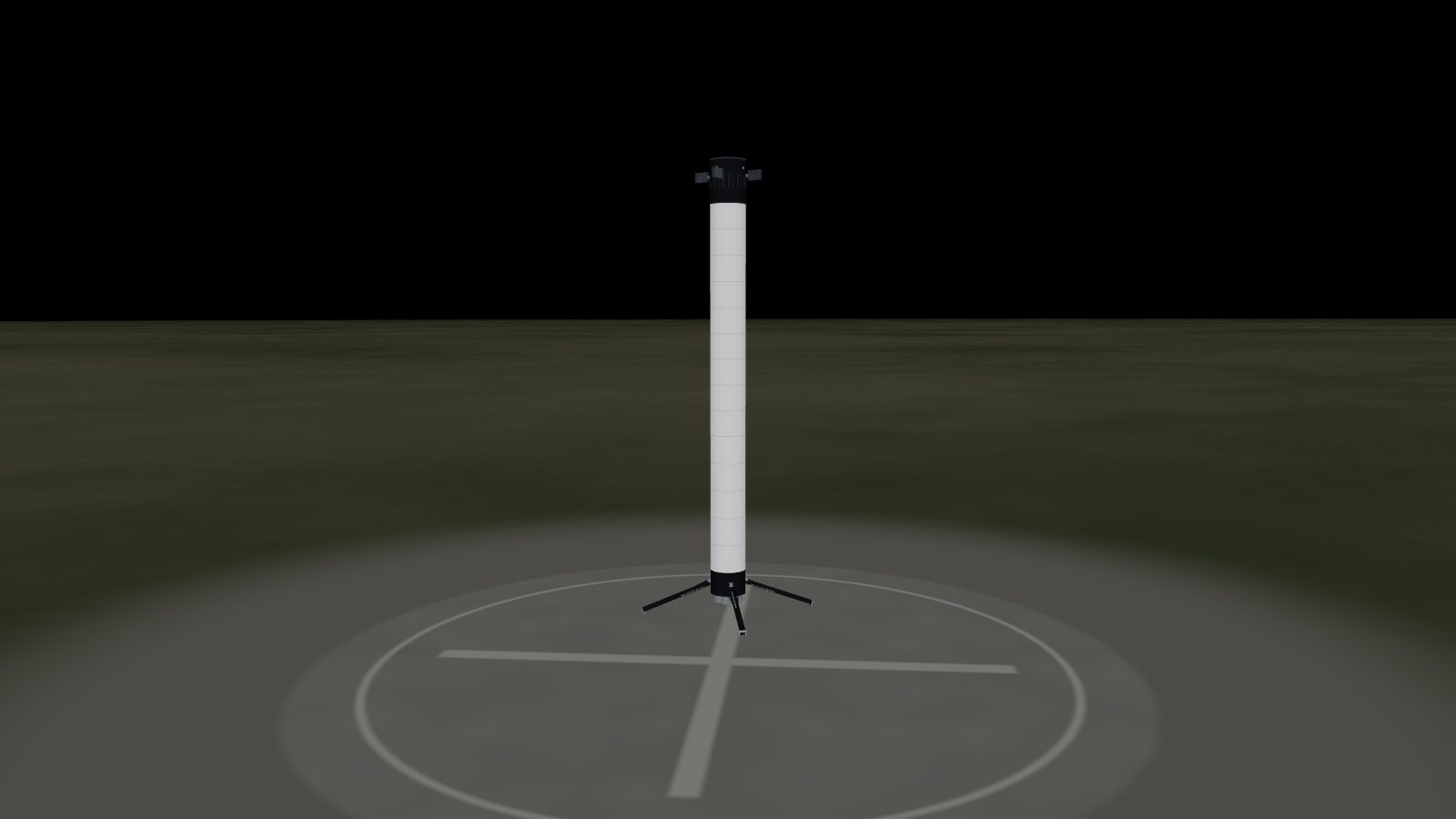
Falcon 9 flight 20 lifted off at 01:29:00 UTC on 22 December 2015 and its first stage stood on Landing Zone 1 at T+9:44, the first landing of an orbital rocket’s first stage. The published times, and what a replay has to fly itself.
How many satellites are in orbit? The junkyard above us
About seventeen thousand working machines, and at least as many dead ones, share the space a few hundred kilometres over your head. How it filled up in one lifetime, who keeps the list, what a collision looks like, and why it reaches your weather forecast.
Moments: a mission replayed in 3D on one clock
Release 1.5.0 adds a new kind of tour, a Moment, and its first demonstration: Apollo 11's Saturn V from ignition to the jettison of the escape tower.