
The First Falcon 9 Landing: Landing Zone 1, 21 December 2015
Falcon 9 flight 20 lifted off at 01:29:00 UTC on 22 December 2015 and its first stage stood on Landing Zone 1 at T+9:44, the first landing of an orbital rocket’s first stage. The published times, and what a replay has to fly itself.
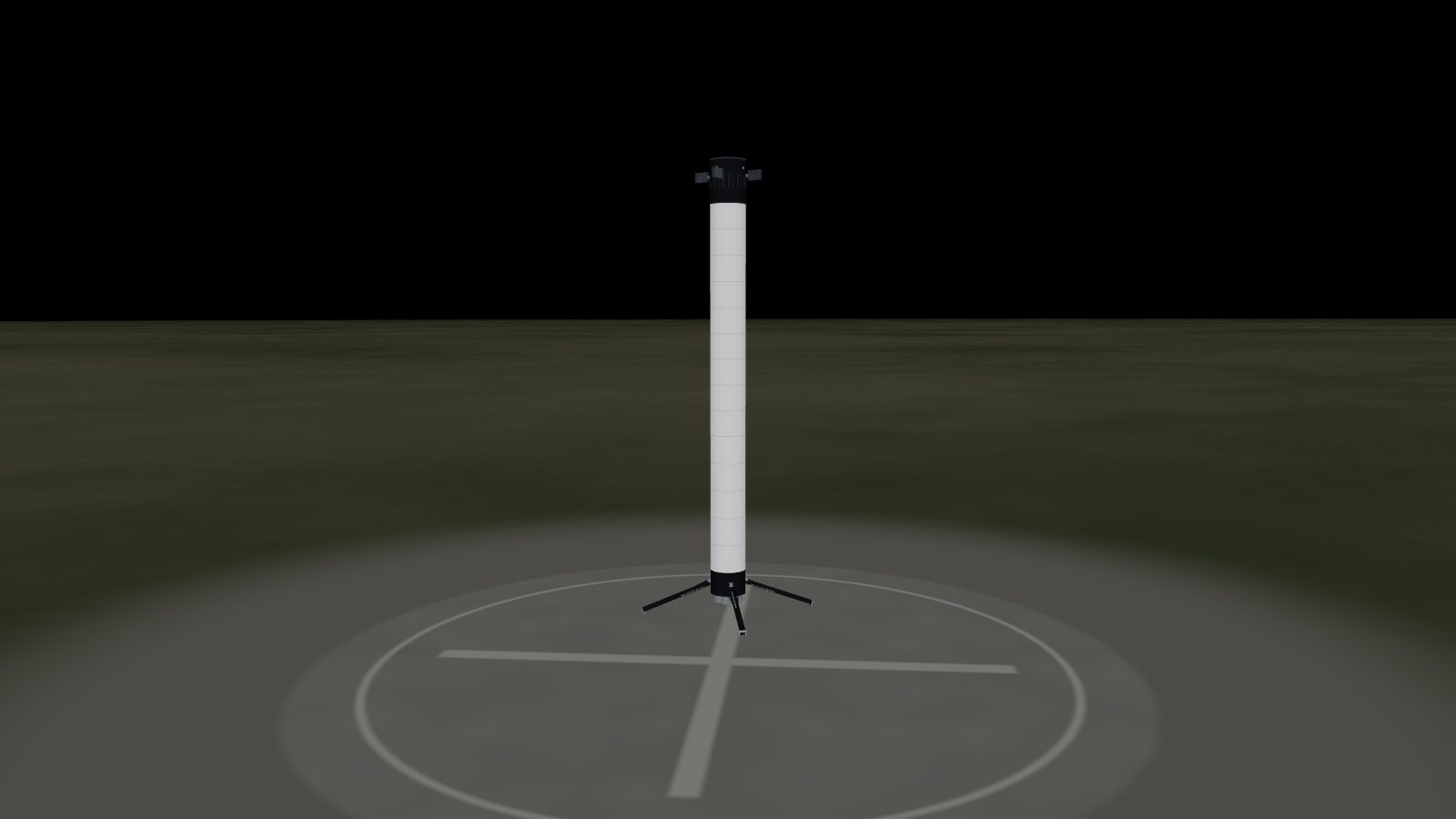
The first stage on Landing Zone 1, a round pad 86 m across with a cross on it. The replay is a night scene, so the rocket and the pad are drawn in a lamp of the app’s own.
The first landing of a Falcon 9 first stage was on the night of 21 December 2015 in Florida, 22 December UTC. Flight 20, ORBCOMM OG2 Mission 2, lifted off from Space Launch Complex 40 at Cape Canaveral at 01:29:00 UTC, and its first stage came down on Landing Zone 1 nine minutes 44 seconds later, at about 01:38:44 UTC. It was the first time the first stage of an orbital-class rocket had returned and landed upright.
The event times below are SpaceX’s plan and a reconstruction of the webcast, and they are what Space Radar’s replay of the flight is pinned to. The path of the stage between them is not published, so the replay flies it and says so. This post separates the two.
The mission, and what was a side show#
The rocket was an upgraded Falcon 9, called Falcon 9 Full Thrust, 70 m tall, on its first flight. The first stage is 41 m of that height. It carried 11 ORBCOMM satellites, and that was the job. SpaceX’s press kit called the landing “a secondary test objective”. The replay opens at T−10 s, with the rocket on its pad at 8:29 p.m. local time, in the dark.
The clock, from the press kit and the webcast#
- T−3 s: the nine Merlin engines of the first stage start.
- T+0, 01:29:00 UTC: lift-off.
- T+1:05 and T+1:13: Mach 1, then max Q, when the air presses hardest; the engines were throttled back for it.
- T+2:23: main engine cut-off, at 75 km up and 1.67 km/s. SpaceX had planned T+2:20; the 2:23 is from the webcast’s reconstruction.
- T+2:25: the stages separate. At T+2:34 the second stage’s engine lights, and at T+2:48 the two halves of the fairing, 5.2 m across, are let go.
- T+3:47: three of the first stage’s engines light for the boostback burn, which turns its path back toward the Cape.
- T+8:01 to T+8:21: three engines relight for the entry burn, to slow the stage before the thick air.
- T+9:11: one engine lights for the landing burn, which lasts 33 seconds.
- T+9:44, 01:38:44 UTC: touchdown on Landing Zone 1.
Meanwhile the second stage deployed the 11 satellites from T+14:26 to T+19:05, then relit its engine to show it could, as it would need to on a later flight. The replay does not draw that part.
What the replay flies for itself#
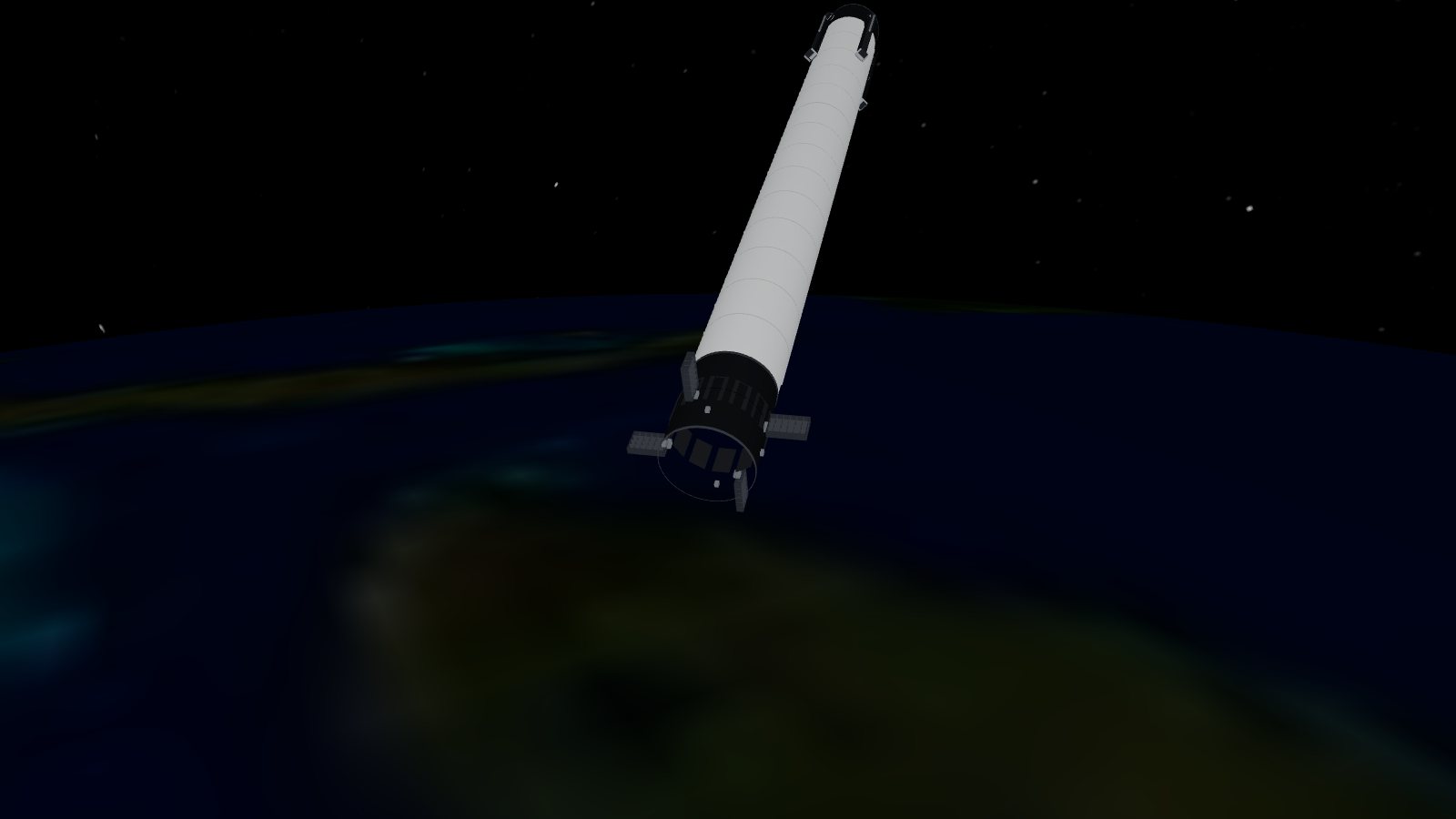
Between the published burns the first stage’s path is a point-mass simulation. The replay’s generator searches for a boostback that works, and for a landing burn that is a guidance to come to rest on the pad at the published second, T+9:44. Its heights and speeds along the way are therefore the app’s. So are the length of the boostback (about 35 seconds in the drawing), the top of the arc (about 190 km up in the drawing), the second at which the four grid fins swing out, and the second at which the four landing legs swing down a few seconds before touchdown.
The second stage’s path after separation is the app’s too. It is pushed along the way it was going and drawn only a short distance. The climb between lift-off and cut-off is also drawn by the app; only the event times, and the height and speed at cut-off, are published.
It is a night launch, so the replay lights the rocket with a lamp of the app’s own, at every height. The ground near the pad and on the landing zone is drawn, not photographed.
- 9 min 44 sFrom lift-off to the first stage standing on Landing Zone 1, T+9:44.
Landing Zone 1#
Landing Zone 1 is a round pad at Cape Canaveral about 86 m (282 ft) across, with a stylised X on it taken from SpaceX’s logo, built where Launch Complex 13 used to stand. In the replay it lies some 9 km south of the pad the rocket left. The pad is drawn as an 86 m circle with its X. Both Landing Zone 1 and Space Launch Complex 40 are places on the map, and each card carries a “Replay this moment” row.
Was it the first rocket landing?#
It depends on what “first” means. On 23 November 2015, a month before, Blue Origin’s New Shepard rocket flew to an apogee of 100.5 km above its test site in West Texas and landed upright, which collectSPACE called a first for a rocket that had launched a payload to space. New Shepard is suborbital: it goes up and comes down. Falcon 9’s first stage had lifted a rocket carrying 11 satellites toward orbit and separated at about 75 km and 1.67 km/s, leaving the second stage to finish the job, and then it turned round and flew itself home. That is the sense in which flight 20 was the first landing of an orbital-class rocket’s first stage.
The booster, SpaceX’s B1019, was not flown again. It was moved to Launch Pad 39A for a static fire, then back to SLC-40 for a test on 15 January 2016 that showed thrust fluctuations on one outer engine, and in August 2016 it went on permanent display at SpaceX’s headquarters in Hawthorne.
A reusable replay#
The replay was built so that another Falcon 9 flight is a record, not a rewrite: a pad, a landing place, the published event times, and the height and speed at cut-off go into one build file, with its words and a test block. The same code flew this first landing and would fly the next.
How to watch it#
Open the Moment and press play; it runs about three minutes of play for 10 minutes of flight. The chapters are Launch Complex 40, lift-off, cut-off and separation, the boostback, the way down, and Landing Zone 1. The landing burn and the touchdown open paused on that second. The clock is in seconds from lift-off, and the player prints any speed-up beside it. No sound plays: SpaceX’s webcast is SpaceX’s and is not licensed for reuse, so the words are captions.
The screenshots are Space Radar 1.7.7 and later (MIT licence) frames rendered by the app. The first stage and second stage are built in code from published dimensions. Times are SpaceX’s plan and the reconstruction of the webcast; the stage’s path, speeds and heights between them are Space Radar’s.
Questions people ask
When was the first Falcon 9 landing?
On the night of 21 December 2015 local time, 22 December UTC. Falcon 9 flight 20 (ORBCOMM OG2 Mission 2) lifted off from Space Launch Complex 40 at Cape Canaveral at 01:29:00 UTC, and its first stage touched down on Landing Zone 1 at T+9:44, about 01:38:44 UTC.
Was it the first rocket to land vertically?
It was the first time the first stage of an orbital-class rocket made a vertical landing. Blue Origin’s New Shepard had landed on 23 November 2015, a month earlier, after a suborbital flight that reached about 100.5 km: it went up and came down rather than going to orbit.
Where did the first Falcon 9 land?
On Landing Zone 1 at Cape Canaveral, a round concrete pad about 86 m (282 ft) across on the site of the former Launch Complex 13, marked with a stylised X. In the replay it is some 9 km south of the pad the rocket left.
Did SpaceX fly that booster again?
No. SpaceX did not fly it again. It was static-fired and tested, and in August 2016 it went on permanent display outside SpaceX’s headquarters in Hawthorne, California.
Sources
- ORBCOMM-2 Mission press kit, SpaceX, 21 December 2015 (archived copy) web.archive.org The plan, the burns, and the landing as a secondary test objective. Cited by the replay; this post did not re-read it.
- Reconstruction: Milestone Falcon 9 flight with eleven OG2 satellites (Spaceflight101) spaceflight101.com Event times from the webcast, MECO at 75 km and 1.67 km/s. Cited by the replay; archived copy.
- Falcon 9 flight 20 en.wikipedia.org Launch time, payload, the landing, the second-stage relight, what became of the booster.
- Landing Zones 1 and 2 en.wikipedia.org The pad’s place, its 282 ft (86 m) diameter and the X.
- Blue Origin New Shepard rocket landing (collectSPACE) collectspace.com New Shepard’s landing of 23 November 2015 and its 100.5 km apogee.
- Space Radar spaceradar.ai The replay is the Moment falcon9-og2-2, added in release 1.7.7.
Explore on Space Radar
Keep reading
Moments: a mission replayed in 3D on one clock
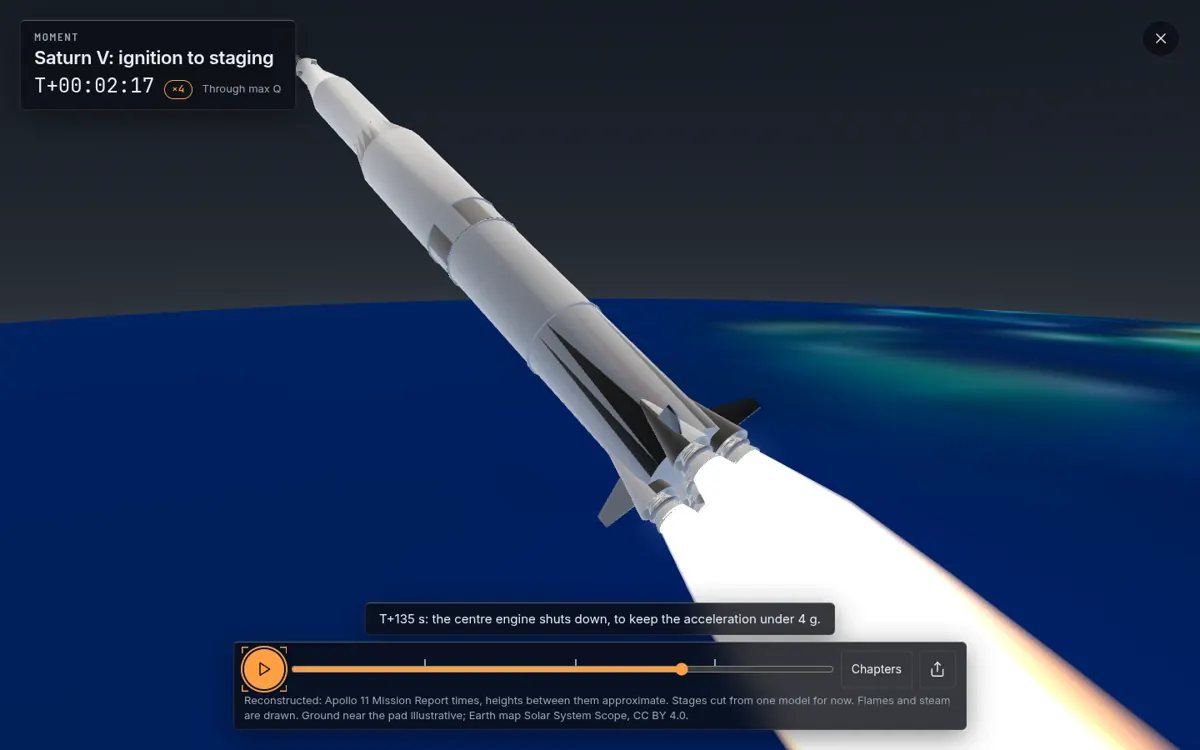
Release 1.5.0 adds a new kind of tour, a Moment, and its first demonstration: Apollo 11's Saturn V from ignition to the jettison of the escape tower.
Curiosity’s Landing: The Seven Minutes of Terror, Step by Step
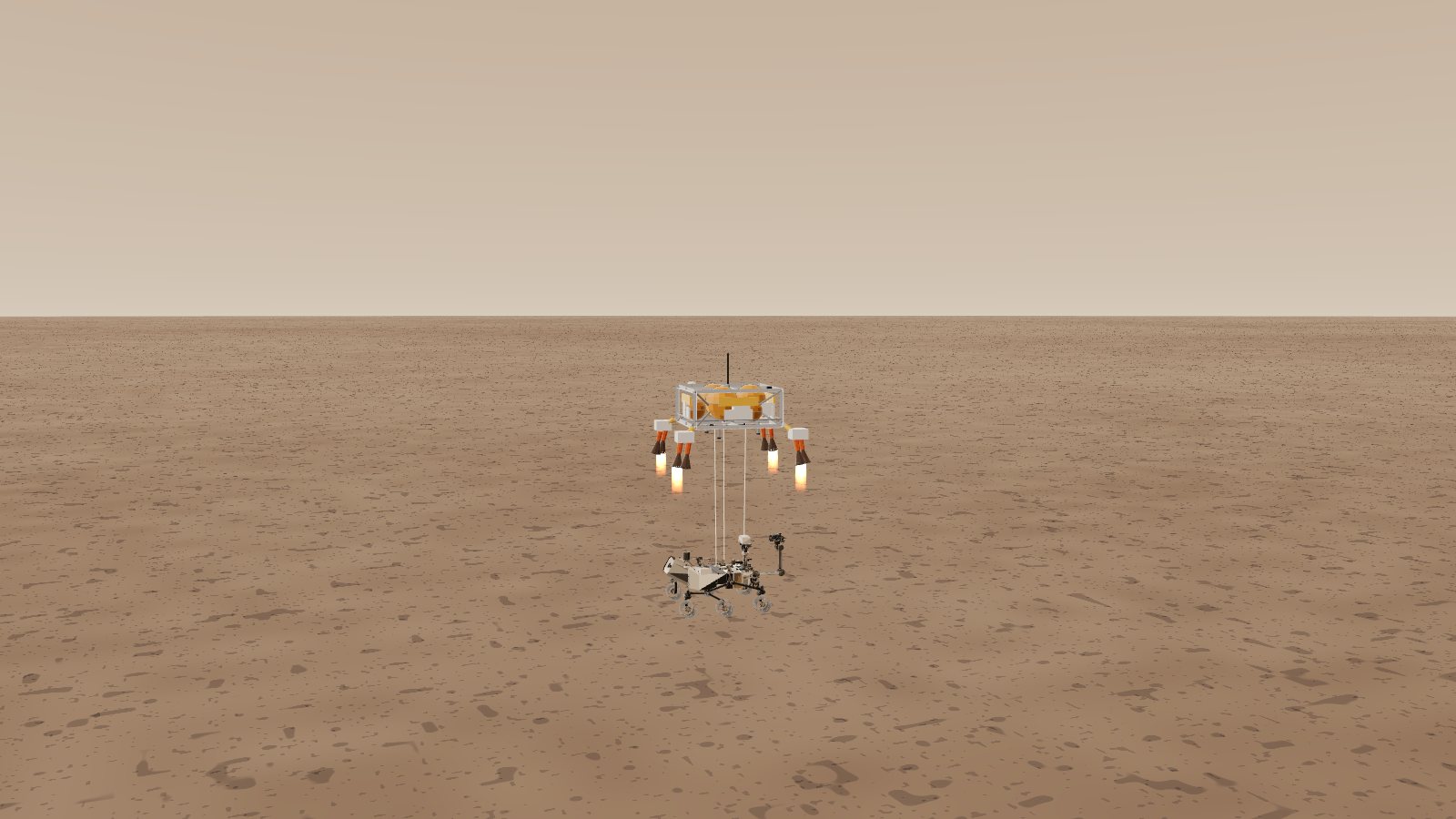
Curiosity’s entry, descent and landing took 7 minutes 11 seconds on 6 August 2012. Here is the clock JPL published, the heights and speeds NASA gave, and what a 3D replay has to fill in between them.
New Horizons at Pluto: When Was Closest Approach, and How Close?
New Horizons passed Pluto on 14 July 2015 at about 12,500 km and 13.8 km/s. NASA’s timetable and JPL’s track disagree on the second by 88 seconds, and a 3D replay has to show both.