
Solar Eclipse 2027: Six Minutes of Night at Noon
The solar eclipse of 2027 will put Luxor in the dark for more than six minutes, the longest totality anyone will stand under until 2114. Here is the day, minute by minute, and where the shadow does and does not reach.
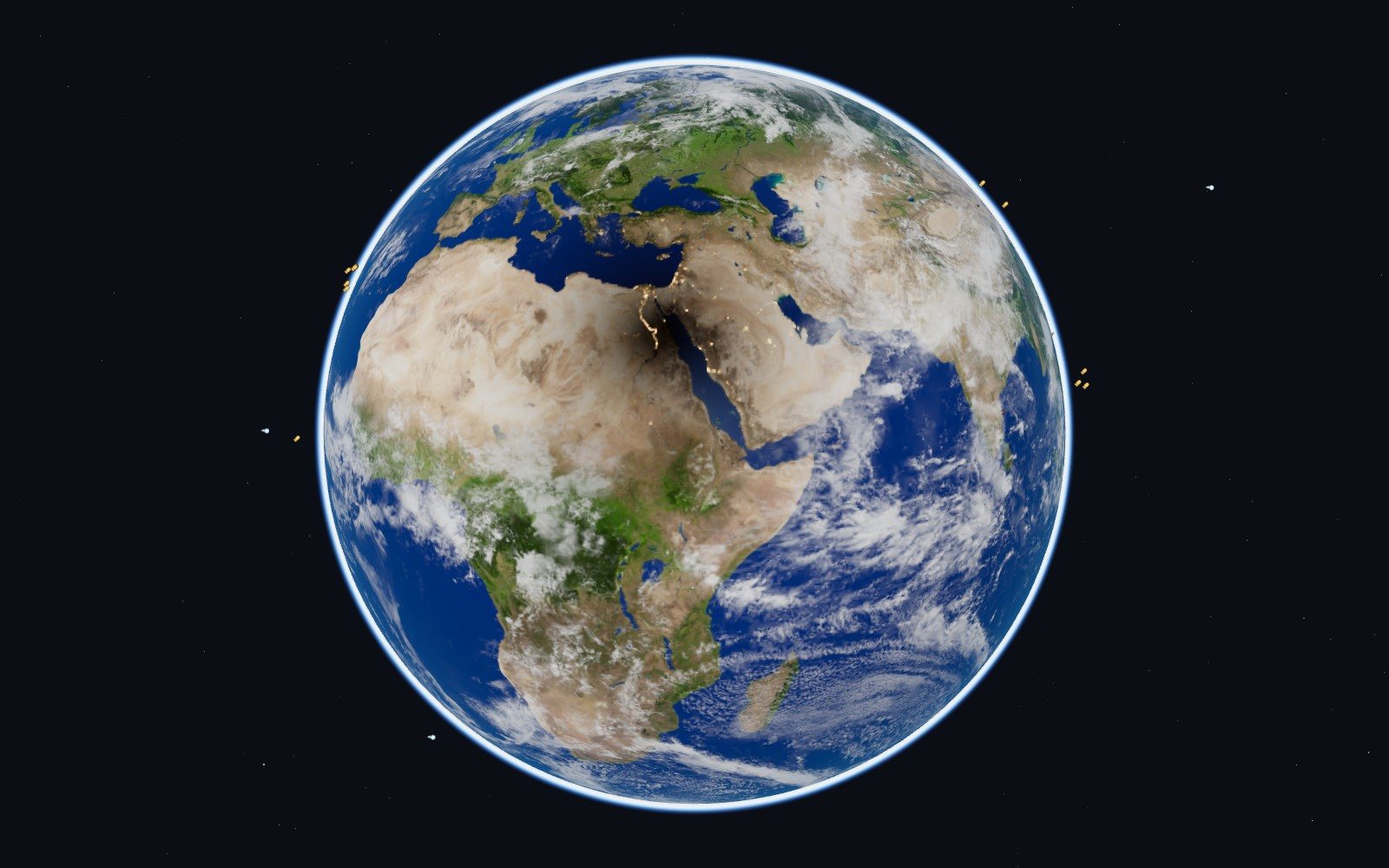
10:06 Universal Time on 2 August 2027, the moment of greatest eclipse. The small dark core is the only place where the Sun is completely covered; under the wide grey fringe around it people see a bite out of the Sun.
At about two minutes past one in the afternoon on Monday 2 August 2027, on the east bank of the Nile at Luxor, noon will stop. The Sun will be almost straight overhead, 82 degrees up, in a sky that has very likely not held a cloud for weeks. For an hour and twenty minutes the Moon will have been sliding across it, and for the last few of those minutes the light on the temple columns will have gone thin and silvery, like daylight seen through dark glass.
Then the last bead of sunlight will go out. A shadow 258 kilometres wide, which crossed the Strait of Gibraltar an hour and a quarter earlier, will arrive over the Valley of the Kings from the north-west. Where the Sun was there will be a black disc with a pale crown of light around it. Venus will appear right beside it. It will stay that way for about six minutes and twenty seconds.
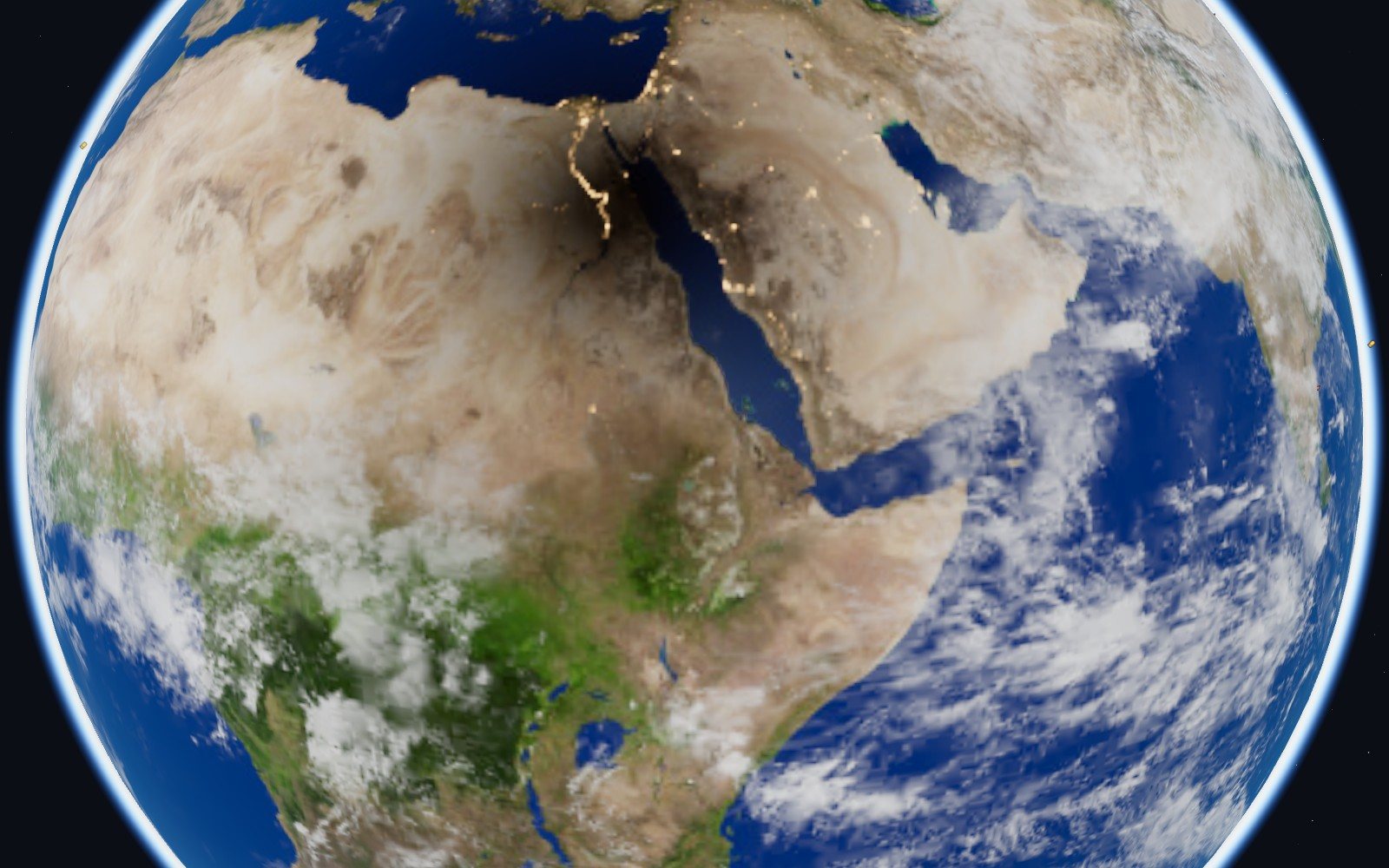
This is the solar eclipse of 2027, and it is not an ordinary one. Its longest totality, 6 minutes 23 seconds, falls about 60 kilometres south-east of Luxor, and nobody on Earth will stand under a longer one until 2114. I have been running that Monday forwards and backwards in Space Radar, a free live map that draws the Moon’s shadow where the Sun and Moon really are. This is what will happen, who will see it, and why people who have seen one total eclipse cross the planet to see another.
Cádiz to Luxor in seventy-eight minutes#
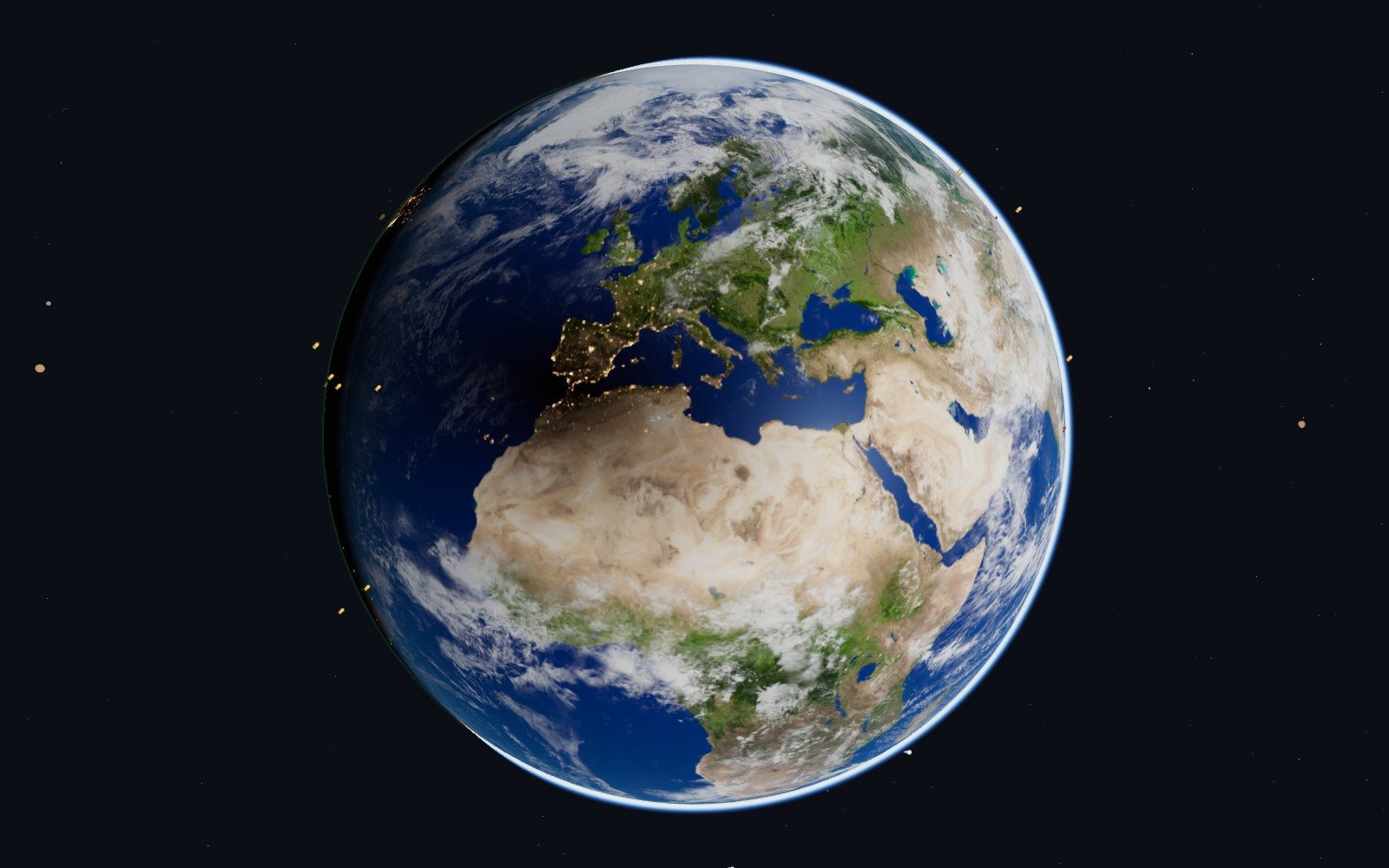
The shadow first touches the Earth at sunrise in the Atlantic. It makes land at the Strait of Gibraltar, in the middle of a Spanish summer morning. According to Spain’s National Astronomical Observatory, Cádiz goes dark at 10:45 local time for 2 minutes 54 seconds, Málaga three minutes later for 1 minute 48, and Ceuta, on the African side, for 4 minutes 48. Tarifa, the southern tip of Europe, gets more than four and a half minutes.
From there the path runs east along the coast of North Africa and grows longer as it goes, because the Sun climbs higher: nearly five minutes at Tangier, about five at Oran, five and three-quarters at Sfax in Tunisia, just over six at Benghazi. It crosses the Libyan desert and the Nile, leaves Africa at the Red Sea, gives Jeddah six minutes and Mecca about five, and thins out again across Yemen and the tip of Somalia before it lifts off the planet at sunset in the Indian Ocean.
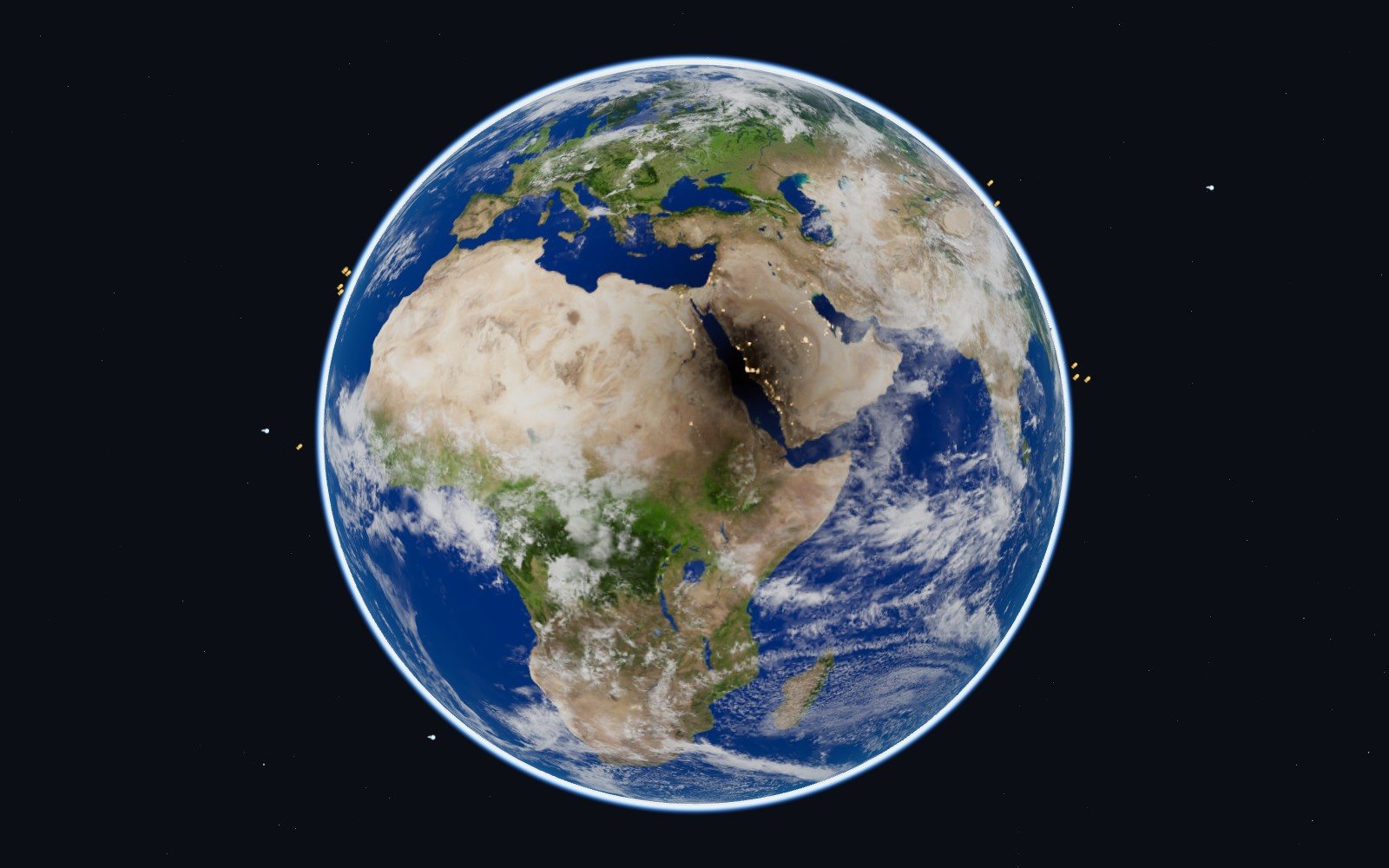
- 78 minutesThe shadow’s run from Cádiz to Luxor, 3,900 km apart: about 3,000 km/h on average, faster than any airliner now flying.
You can watch the whole crossing in a couple of minutes: follow the Moon’s shadow across the Earth from the hour before it arrives, or open the map at the minute the shadow reaches the Strait of Gibraltar.
What Madrid, Tel Aviv and Moscow will see#
Outside that narrow track the same eclipse is partial, and a very large part of the world gets a share of it. These figures are the fraction of the Sun’s disc that is covered at the deepest moment, computed for each city.
Spain outside the path comes close: Seville 98 per cent, Lisbon 92, Madrid 86, Barcelona 82. Further north the bite shrinks: Rome 74 per cent, Athens 78, Paris 51, London 42, Berlin 34.
Israel lies north of the path and sees a deep partial eclipse in the early afternoon. Tel Aviv and Jerusalem have about 80 per cent of the Sun covered at 13:00, Haifa 77, Eilat 89. Cairo gets 95 per cent, and so does Sharm el-Sheikh. The Red Sea resort of Hurghada, at about 98, misses totality by a short drive.
Russia sees only the outer edge. In Moscow the Moon covers 9 per cent of the Sun around 12:40, in St Petersburg 6. The south does better, with roughly a third of the Sun covered in Sochi and Krasnodar. Beyond the Urals, in Yekaterinburg or Novosibirsk, there is no eclipse at all.
Why 99 per cent is nothing like 100#
It is tempting to think that 95 per cent of an eclipse is 95 per cent of the experience. It is closer to none of it.
The Sun’s outer atmosphere, the corona, is always there. It is also about a million times fainter than the Sun’s surface, roughly as bright as a full Moon. So while even one per cent of the surface is showing, that sliver is still ten thousand times brighter than the corona, and the sky stays blue. In Cairo on 2 August the light will turn strange and the shadows sharp, and people who look through eclipse glasses will see a thin crescent. But the day will not end.
It is tempting to think that 95 per cent of an eclipse is 95 per cent of the experience. It is closer to none of it.
Inside the path the last per cent goes in a few seconds, and everything changes at once. The corona appears. The brightest planets come out: Venus less than three degrees from the Sun, Mercury to one side and Jupiter to the other. At Luxor, so will the stars that belong to winter evenings. Sirius and Orion are in the August sky every day, hidden by daylight, and for six minutes they will be there in the south-west. All round the horizon, 130 kilometres away in every direction, there will be the orange glow of places where the Sun is still shining.
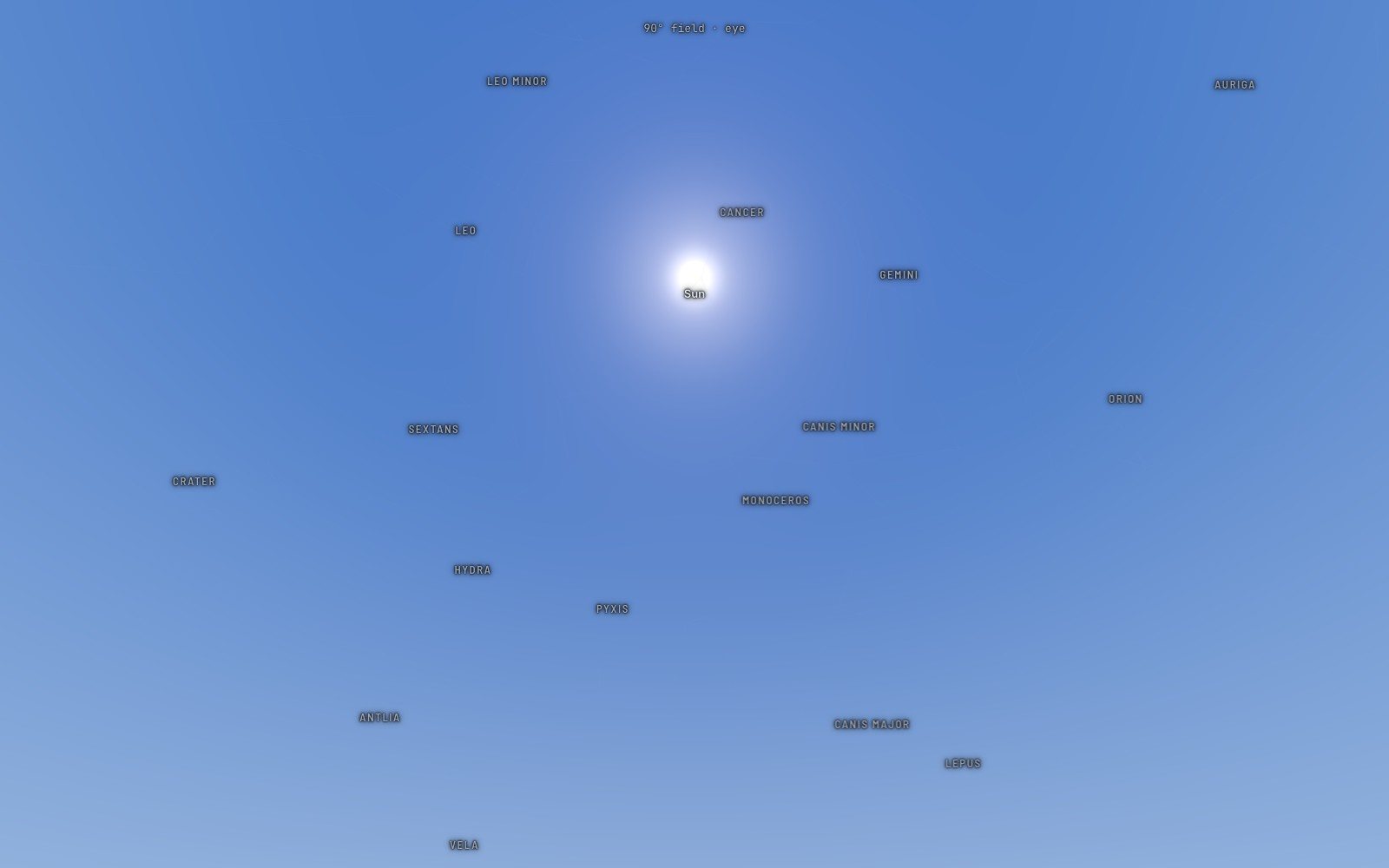
It is this, and not the darkness, that people travel for. You can see where the Moon is standing to do it, too: look back from the Moon at its own shadow on the Earth.
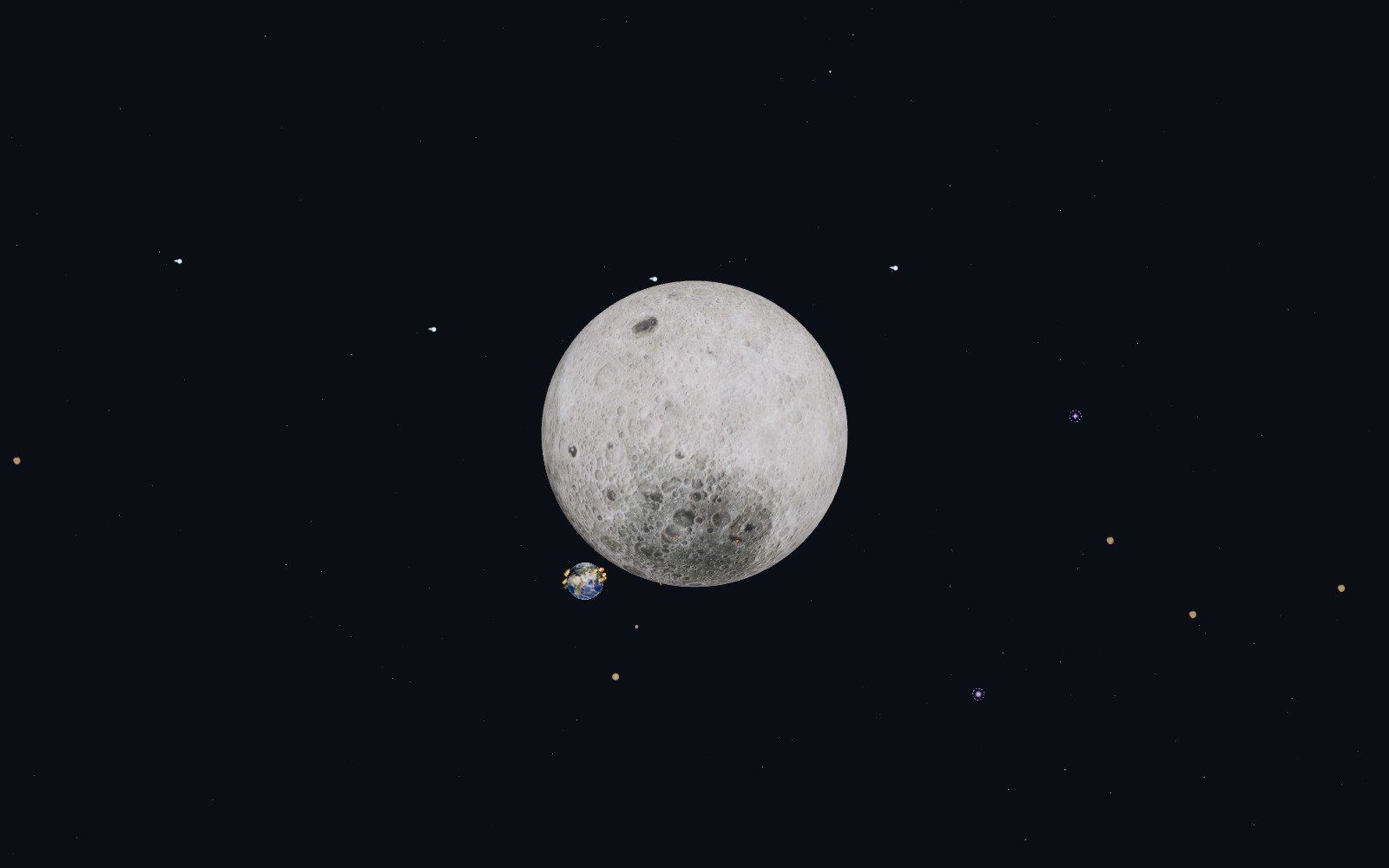
The people who run after shadows#
They call themselves umbraphiles, shadow lovers, and the most committed of them did something on 30 June 1973 that has never been repeated. Seven scientists boarded the prototype Concorde, flew at twice the speed of sound along the path of an eclipse over the Sahara, and kept up with the shadow. They had 74 minutes of totality in a single sitting. It is still the record.
The rest of us stand still and let the shadow come to us, and for Spain it is coming often. The eclipse of 2027 is the second of three in three summers: a total eclipse crossed the north of the country on 12 August 2026, and a ring-shaped one follows in January 2028.
Science has run after shadows as well. On 18 August 1868, during an eclipse in India, the French astronomer Pierre Janssen pointed a spectroscope at the edge of the Sun and saw a yellow line that matched no known element. It was named helium, after the Sun, and was not found on Earth for another 27 years. On 29 May 1919 Arthur Eddington photographed the stars around an eclipsed Sun from the island of Príncipe and found them slightly out of place: the Sun’s gravity had bent their light, by the amount Einstein had predicted four years earlier. And the oldest story of all is Herodotus’s. In 585 BC, he wrote, the Lydians and the Medes were in the middle of a battle when day turned to night, and they put down their weapons and made peace.
A coincidence with an expiry date#
Total eclipses exist because of a fluke. The Sun is about 400 times wider than the Moon and about 400 times farther away, so from the ground the two discs are almost exactly the same size. No other planet in the Solar System has such a match.
The fit is not perfect, and that is why this eclipse is long. On 2 August 2027 the Moon reaches its nearest point to the Earth for the month less than four hours before greatest eclipse, so it looks large. The Earth, a month after its farthest point from the Sun, sees a Sun that looks small. And the shadow falls near the tropics at midday, where the ground is nearest the Moon. The theoretical limit is about seven and a half minutes; 6 minutes 23 seconds is as near to it as this century’s remaining eclipses get. When the fit goes the other way, with the Moon far and small, a bright ring of Sun is left over and the day never ends. The map shows that kind too, in the same trip.
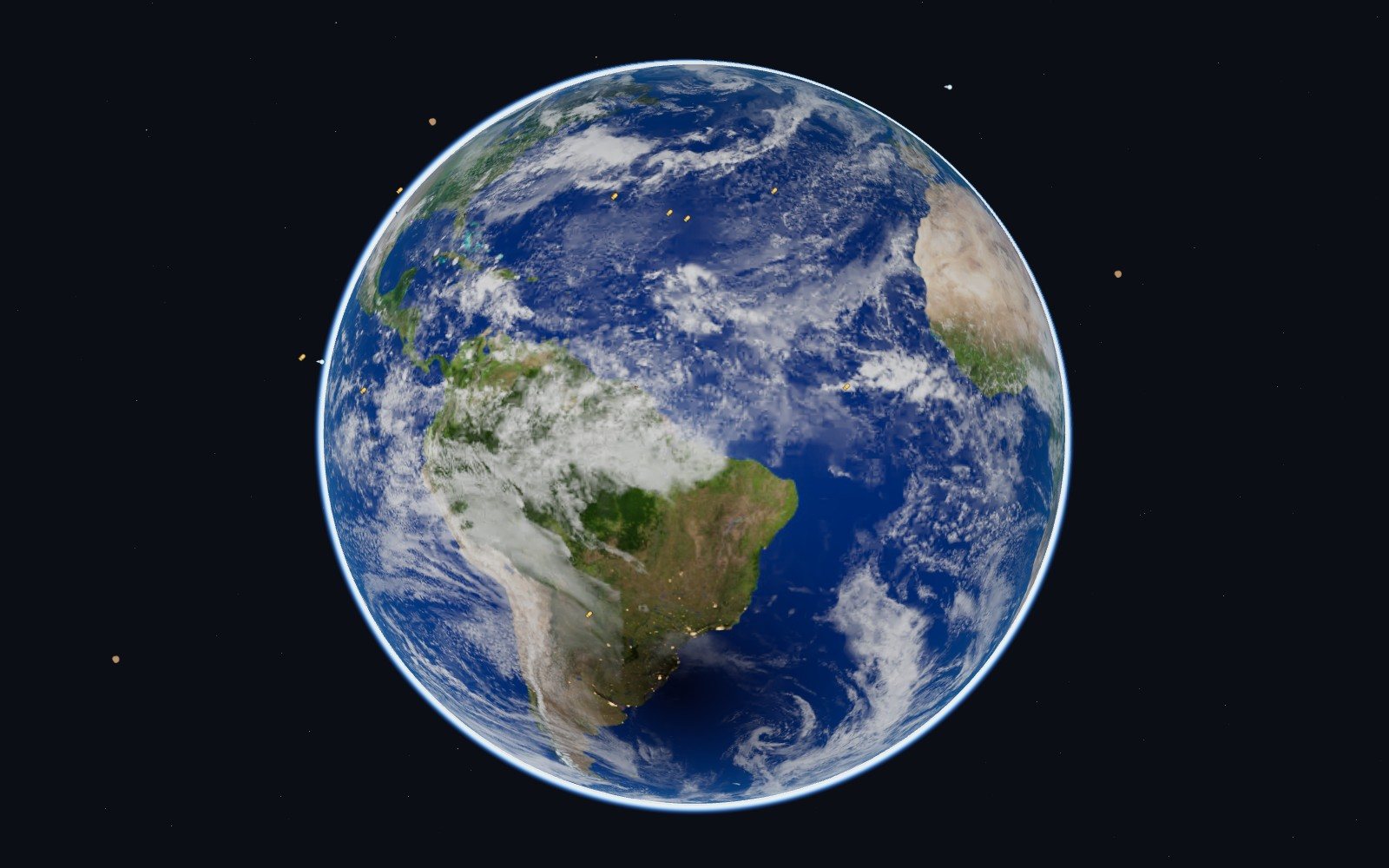
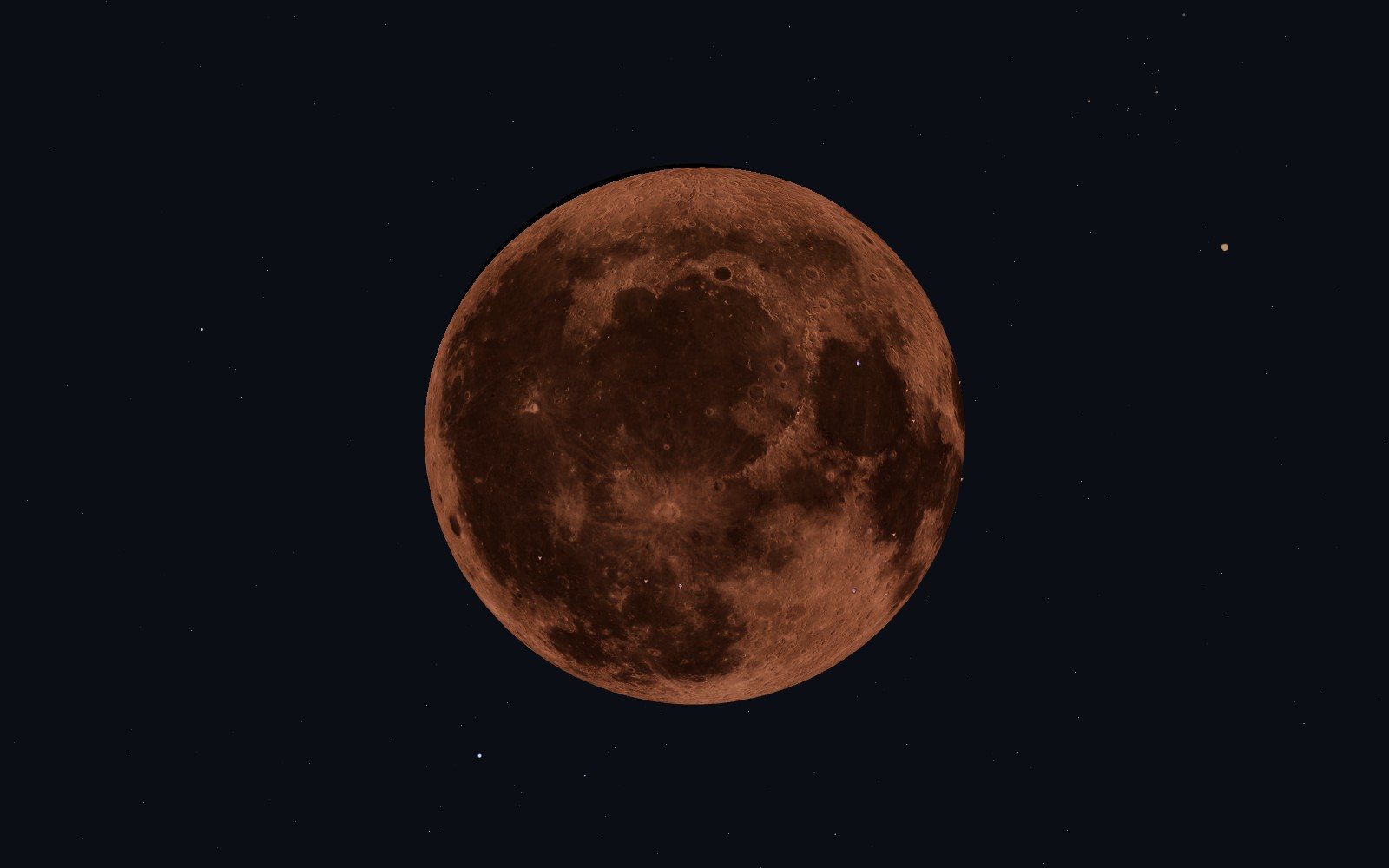
It will not last. The Moon is moving away from us by about 3.8 centimetres a year, measured by bouncing lasers off reflectors the Apollo crews left behind. In something like 600 million years it will be too small in the sky to cover the Sun, and there will be no more total eclipses, here or anywhere we know of.
Where to stand, and how to look#
Three rules do most of the planning.
First, be inside the path. A hundred kilometres outside it is a different event. Within it, the nearer the centre line, the longer the totality.
Second, choose your weather. Jay Anderson, the meteorologist eclipse chasers rely on, told Sky & Telescope that just about anywhere in Tunisia, Libya and Egypt offers a good to excellent chance of clear sky. Egypt and Libya also regularly pass 40 °C in August. Southern Spain is gentler and far easier to reach, at the cost of a shorter totality and some risk of Saharan dust or coastal fog.
Third, protect your eyes, and know the one exception. For every partial stage, anywhere, you need eclipse glasses or a viewer that meets the ISO 12312-2 standard; NASA is blunt that ordinary sunglasses, however dark, are not safe. Never look through binoculars or a camera with only eclipse glasses on. During totality itself, and only then, you take the glasses off and look. The moment the first bead of Sun returns, they go back on.
Six minutes is long for an eclipse and short for anything else.
And if it is your first, do not spend it behind a camera. Six minutes is long for an eclipse and short for anything else.
Until then you can open your own sky at the minute of greatest eclipse and see where the Sun will be standing; the map guesses your place from your time zone, so set your town first. On the map the shadow is a small soft-edged spot crossing North Africa. On the ground it will be the largest thing most of the people under it have ever seen move, and it will arrive on time to the second.
Times and coverage for cities outside Spain were computed with the open-source Astronomy Engine library and checked against NASA’s and Spain’s published figures; they are good to a few seconds and about one per cent. Space Radar is a free, open-source live 3D map of everything in orbit, with the Sun, Moon and their shadows drawn where they really are. It runs in a browser at spaceradar.ai, with no account.
Questions people ask
When and where is the total solar eclipse of 2027?
On Monday 2 August 2027. Totality is visible along a track through southern Spain, Morocco, Algeria, Tunisia, Libya, Egypt, Saudi Arabia, Yemen and Somalia; most of Europe, Africa and western Asia see a partial eclipse.
How long will the 2027 eclipse last?
Up to 6 minutes 23 seconds of totality near Luxor in Egypt, and from about two to five minutes in southern Spain and Morocco. The partial stages last well over two hours.
Is it the longest eclipse of the century?
It is the second longest; the eclipse of 22 July 2009 reached 6 minutes 39 seconds, mostly over the Pacific. No total eclipse will be longer than 2027’s until 3 June 2114.
Is it safe to look at a solar eclipse?
Only through eclipse glasses or viewers that meet ISO 12312-2, except during the few minutes of totality, when the Sun is completely covered and can be seen directly.
Sources
- Told *Sky & Telescope* skyandtelescope.org
- Spain’s National Astronomical Observatory astronomia.ign.es
- 74 minutes of totality en.wikipedia.org
- NASA is blunt science.nasa.gov
- Eclipse.gsfc.nasa.gov: SEdata eclipse.gsfc.nasa.gov
- Eclipsewise.com: SE2027Aug02Tprime eclipsewise.com
- Eclipse.gsfc.nasa.gov: SE2001 2100 eclipse.gsfc.nasa.gov
- Aa.usno.navy.mil: Earth Seasons aa.usno.navy.mil
- Eclipse262728.es eclipse262728.es
- St.llnl.gov: airborne pursuit total eclipse st.llnl.gov
- Space.com: on this day in space aug 18 1868 total solar eclipse leads to discovery of helium space.com
- Science.nasa.gov: history science.nasa.gov
- Revistapesquisa.fapesp.br: when light bent revistapesquisa.fapesp.br
- Bendbulletin.com: how long we will see total solar eclipses before the moon ditches us bendbulletin.com
- Stardate.org: rare eclipse stardate.org
- Spaceradar.ai spaceradar.ai
Explore on Space Radar
Keep reading
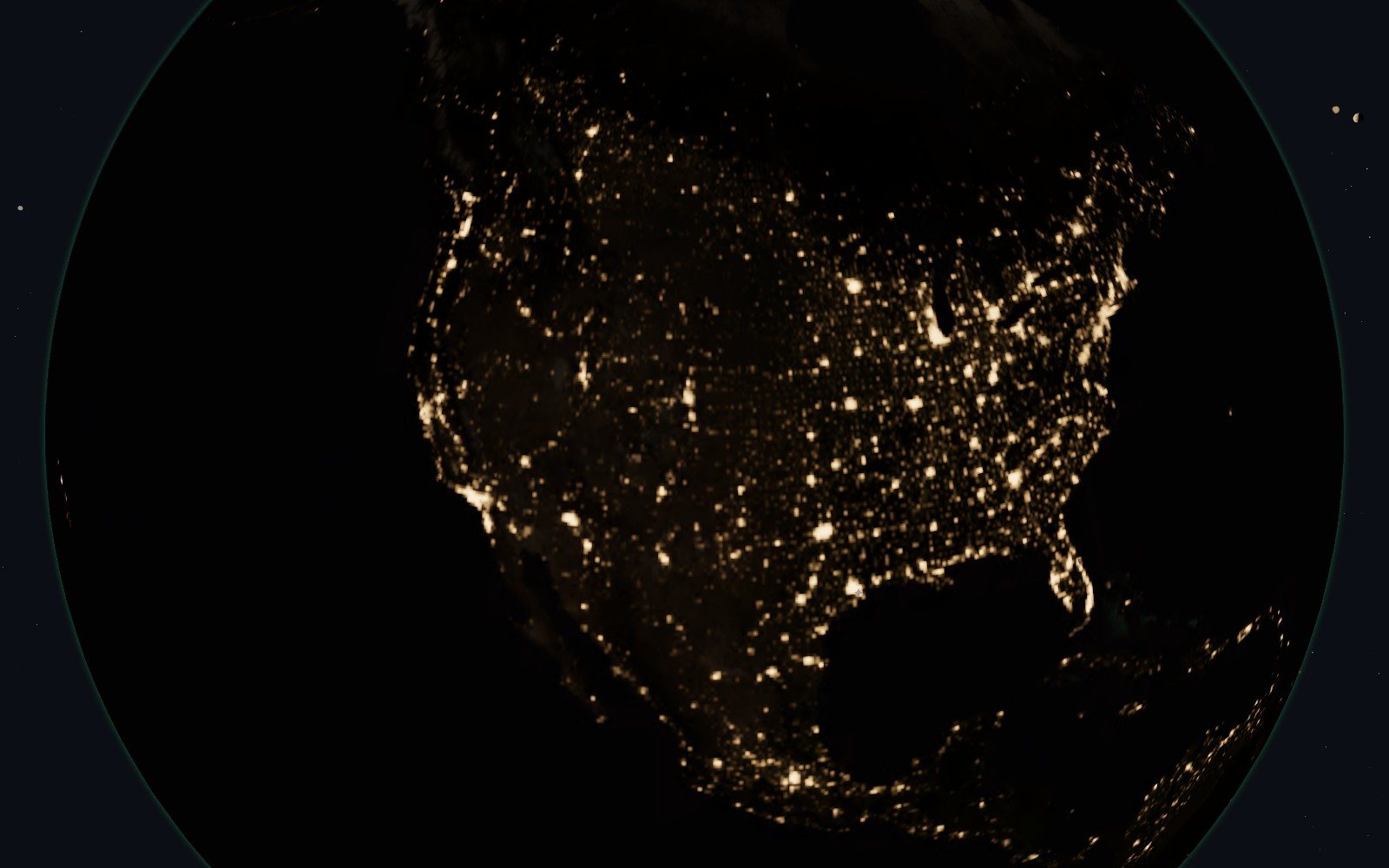
What Is in the Sky Tonight? Relearning to Look Up
What is in the sky tonight, seen from an ordinary city balcony, is a short list. Almost nobody is taught it any more. It takes one evening to learn.
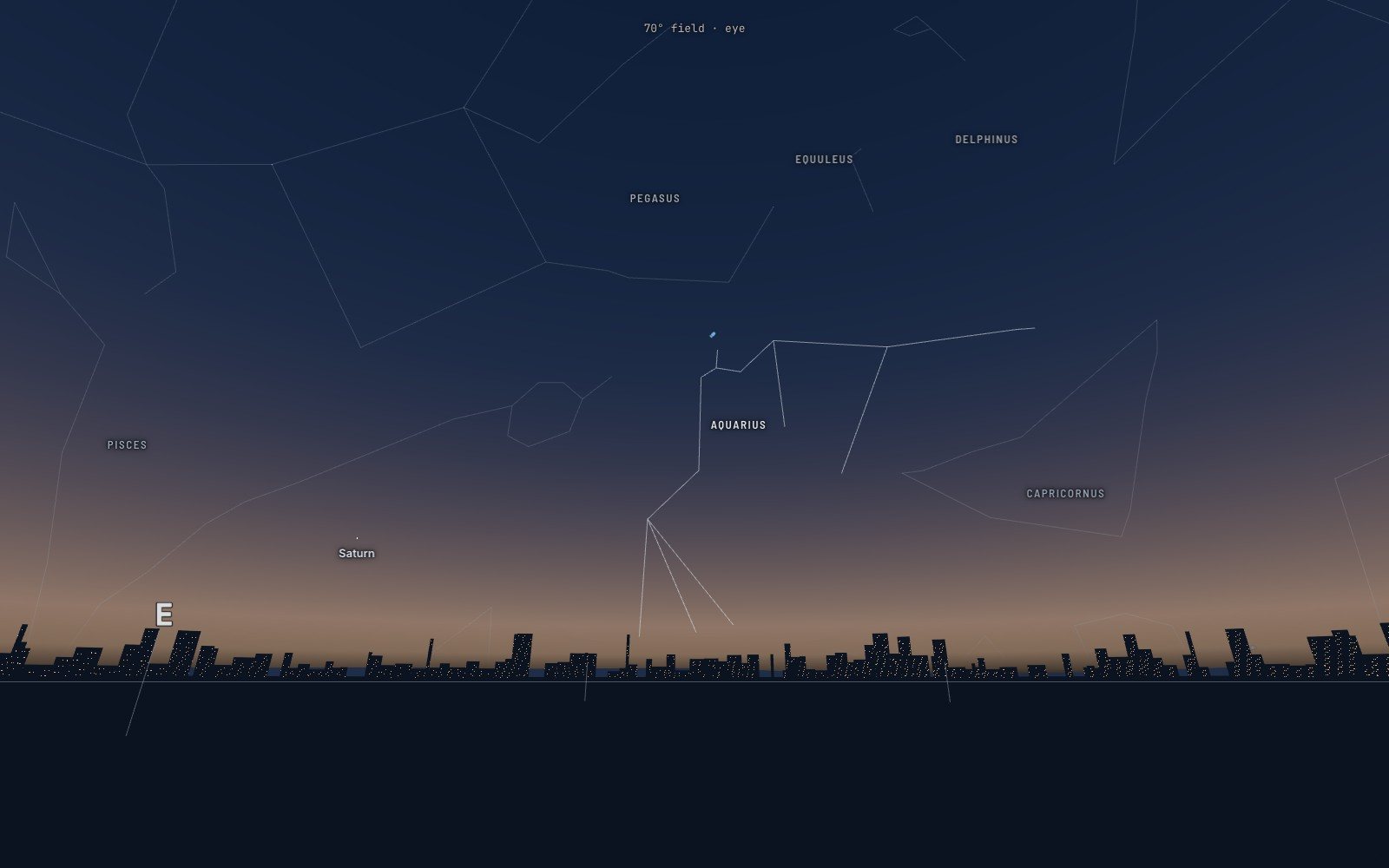
ISS pass tonight? Ask the sky over your own street
Most sky apps assume you know the constellations. The Tonight view in Space Radar assumes you know which way is south. What it works out for one street on one evening, and what it admits it cannot know.
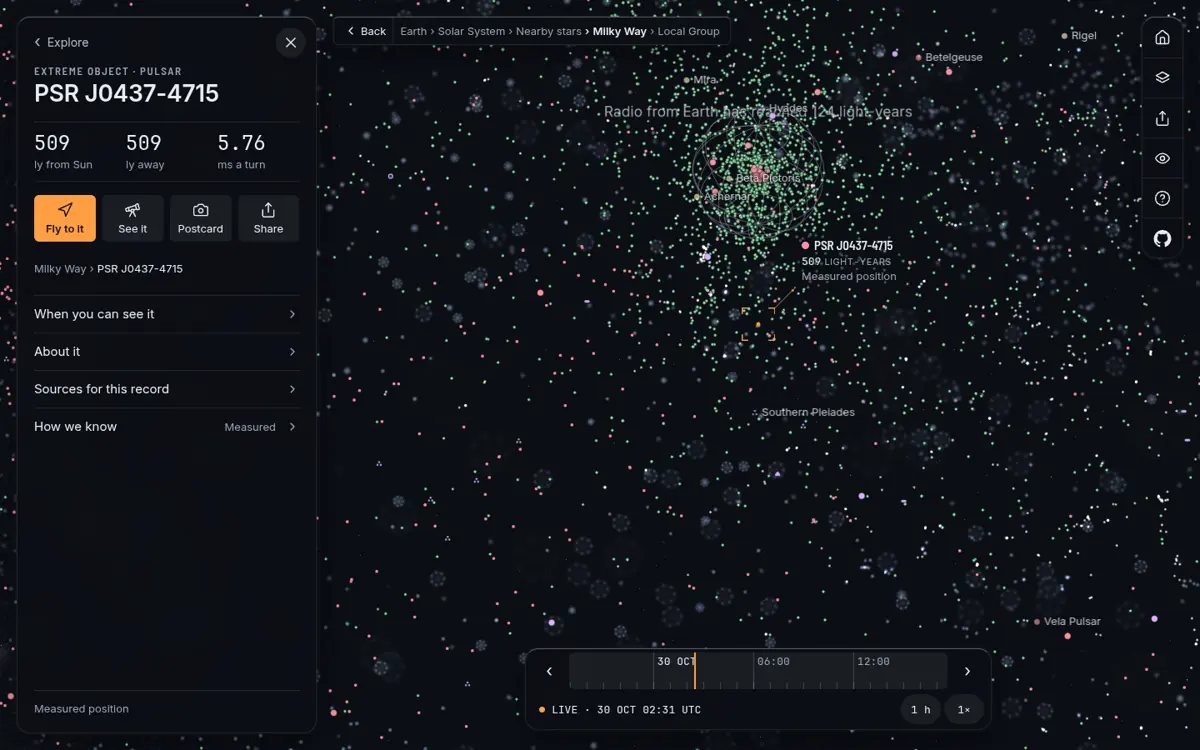
Stars with no distance, 4 383 pulsars and the farthest galaxy
Release 1.5.0 fills the sky with what the catalogues know, and says on every card how a distance was found, or that it never was.