
Orbit Crew: A Space Cartoon for Kids Where the Science Is Real
A satellite goes silent, a captain reaches for the biggest wrench on the station, and a robot shouts at space. Our first cartoon episode is 70 seconds long and teaches one true thing about radio.
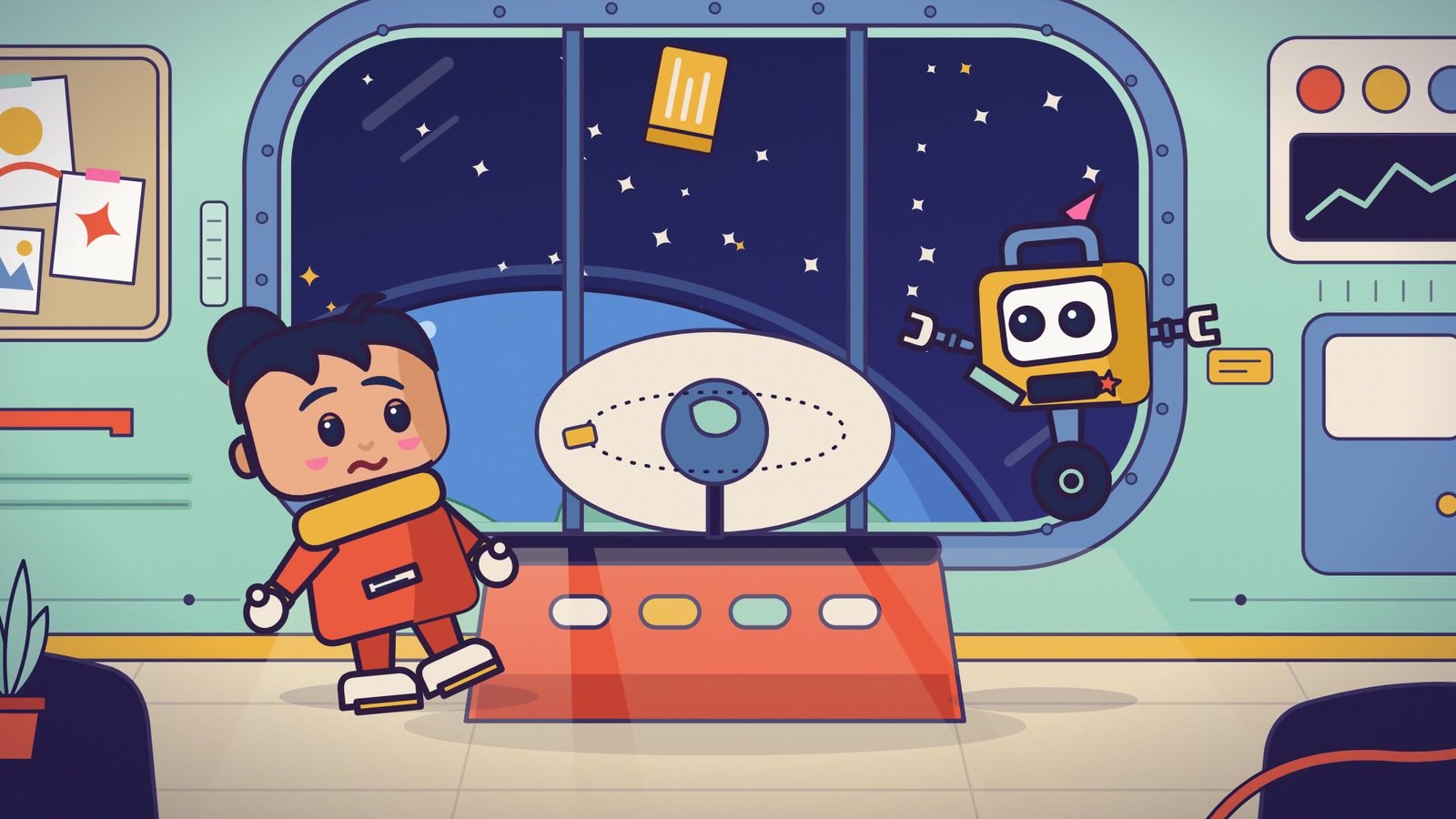
Captain Ada and BEEP on the command deck of Orbit One, from Episode 0. Space Radar (MIT)
Orbit Crew is a new animated series from Space Radar for children of about 6 to 8: a junior crew on a space station, one funny problem in each episode, and one real idea about space. The first one, Episode 0, The Silent Satellite, is out today. It is 70 seconds long and free to watch below, on our video site and on YouTube.
What happens in Episode 0#
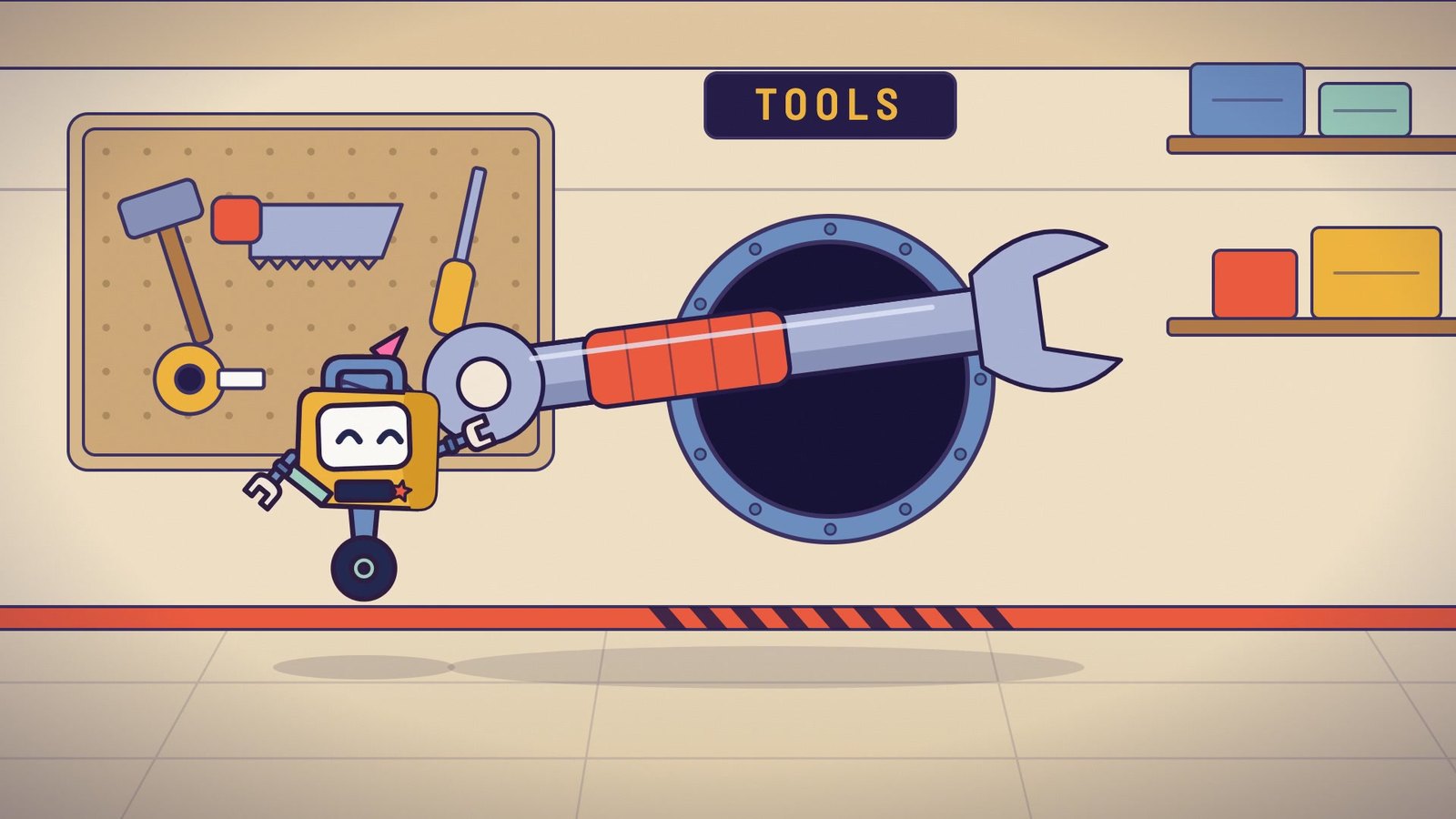
A little satellite called Pico is talking to the station Orbit One. Then it stops. BEEP, the station's robot, rockets across the deck to tell Captain Ada, who decides at once that Pico is broken and sends him for the big wrench. The wrench turns out to be twice his size and has ideas of its own.
BEEP tries shouting instead. Space does not answer. Only then does Ada look at the map, and the map shows the real reason: Pico is on the far side of the Earth. Nothing is broken. They wait, Pico comes round again, the signal returns, and BEEP takes the credit for his very powerful voice.
The one true thing: radio goes in straight lines#
Every episode is built around a single idea that is simply true. Here it is this: radio travels in straight lines, and it does not go through a planet. A satellite in low orbit circles the Earth in about an hour and a half, so for much of each lap the Earth itself sits between it and whoever is listening.
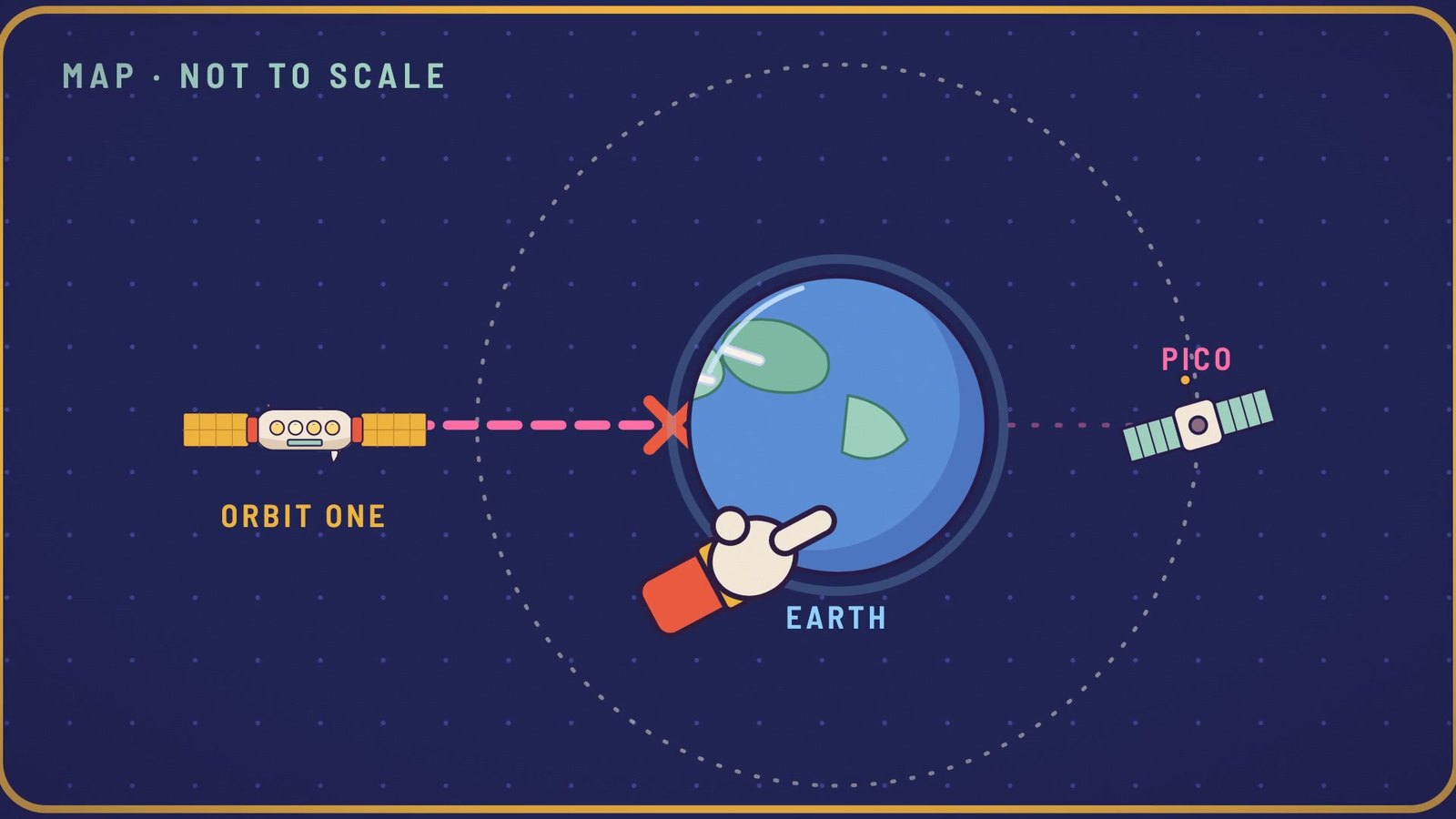
Real operators live with this every day. NASA's own guide to small spacecraft explains that a satellite in low orbit can talk to a ground station only while it is in that station's line of sight, which is a few minutes of each pass. The International Space Station goes round about every 90 minutes. In the cartoon the wait is shortened, and we say that too.
Who is in the crew#
- Ada, the captain. She is quick, brave and often sure of the wrong answer first. She is the one who stops and looks at the map.
- BEEP, the robot. He has a flag on his head that shows how he feels, a hatch that flaps when he talks, and great confidence in his own voice.
- Pico, a small satellite who only blinks and beeps, and who was never lost at all.
More of the crew will arrive in later episodes.
How it is made: drawn in code, no generated video#
We set one hard rule for this series: no text-to-video and no image-to-video models. Generated footage changes a character's face from shot to shot, and a series needs the same Ada every time. So the cartoon is drawn the slow way, by a program.
- The scenario is a table of about twenty shots in three places, none longer than six seconds, with every science claim tied to a source.
- The voices come first. Each line is recorded separately, then transcribed by a second program and compared with the script, so a slurred word is caught before anything is drawn.
- The characters are vector drawings with an ink outline and flat cel colours. Each one is a function: give it a pose and it returns the drawing. Every movement on screen is a function of time, with the classic tricks of hand animation: anticipation, overshoot, squash and stretch.
- The sound is synthesised from the same cue times as the picture: music, whooshes, the clang of the wrench. Nothing is licensed from anyone else.
- The film is rendered frame by frame, then checked: length, loudness, and a transcription of the finished film against the script.
The voices are synthetic text to speech, and we say so in the credits. A cartoon made this way can be rebuilt exactly, corrected when a fact turns out to be wrong, and translated without drawing it again.
Where to watch, and what comes next#
- The series page: video.spaceradar.ai/series/orbit-crew, with chapters, captions and a transcript.
- YouTube: the Orbit Crew playlist, in episode order. The episode is published as Made for Kids.
- A 35-second cut for YouTube Shorts and Instagram, re-framed for a phone and still telling the whole idea.
Episode 1, Sixteen Sunrises, is in production: Ada cannot finish her breakfast because the Sun keeps coming up. After that come a runaway sandwich, a robot who repaints the “this way up” arrows, and a shooting star seen from above. We plan a new episode about every three days.
If a child in your house watches it, we would like to know what they asked afterwards. That question is the best review a science cartoon can get, and it tells us what to draw next. Space Radar is open source, and the place to tell us is our GitHub or any of our channels.
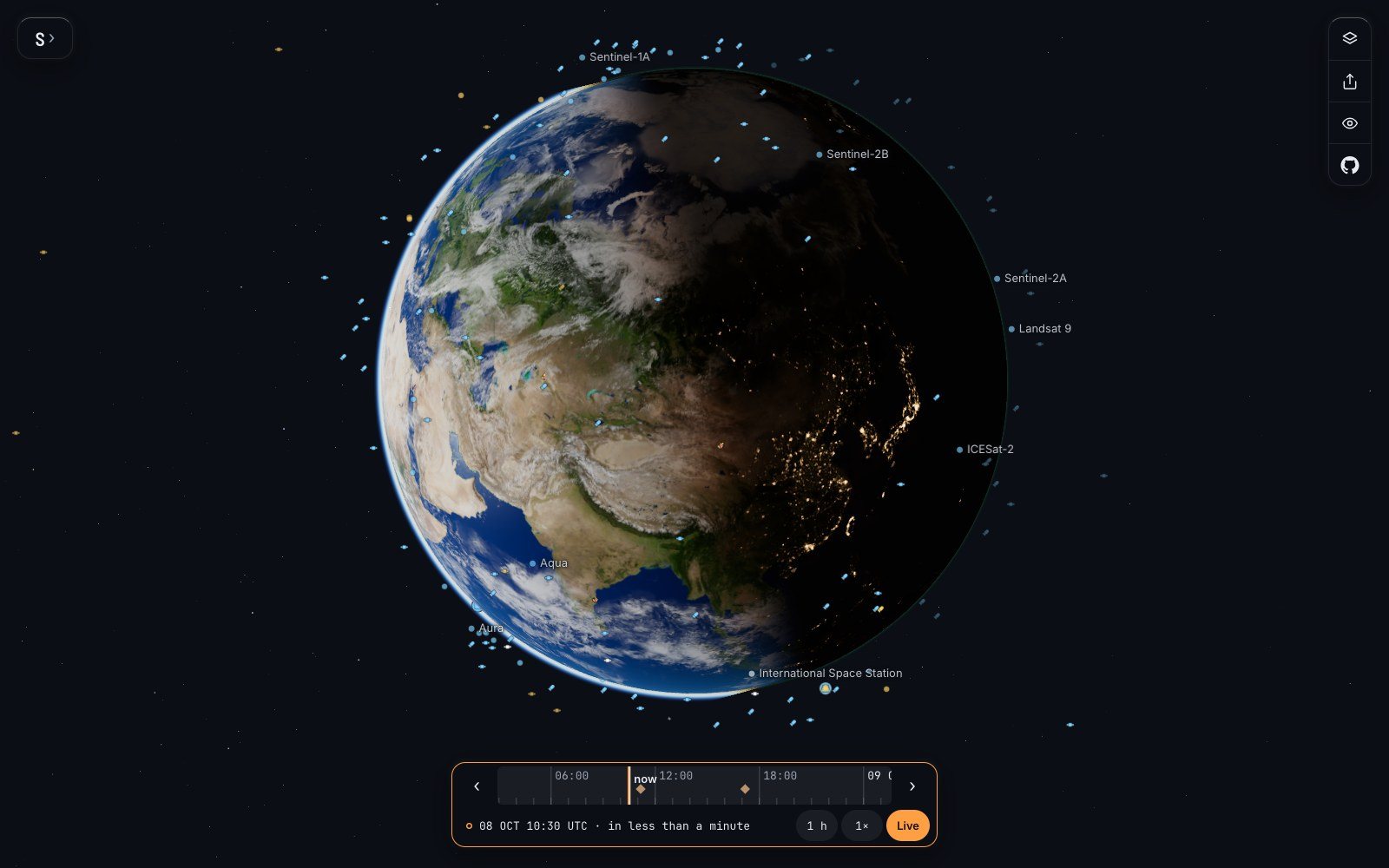
And when the questions turn to real satellites, they are all on the map: more than ten thousand of them, moving where they really are right now.
Questions people ask
What is Orbit Crew?
Orbit Crew is an animated series from Space Radar about a junior crew on a space station called Orbit One. Each episode is one funny problem and one real idea about space. It is free to watch.
What age is Orbit Crew for?
It is written for children of about 6 to 8, and for the parents and teachers who watch with them. There is nothing frightening in it and nobody is mocked.
Why does a satellite go silent?
Most often because the Earth is in the way. Radio travels in straight lines, so a ground station or another spacecraft can only hear a satellite in low orbit while it is in its line of sight. When the satellite comes round again, the signal returns.
Where can I watch Orbit Crew?
On Space Radar's video site at video.spaceradar.ai/series/orbit-crew/, and on Space Radar's YouTube channel in the Orbit Crew playlist, with a short cut on YouTube Shorts and Instagram.
Is the cartoon made with AI video?
No. Every frame is drawn by code: the characters are vector drawings posed by a program, and the picture is rendered frame by frame. No generated video is used. The voices are synthetic text to speech, and the music and sound effects are synthesised by us.
How often will new episodes come out?
The plan is a new short episode about every three days. Episode 1, Sixteen Sunrises, is in production.
Sources
- State of the Art of Small Spacecraft Technology, chapter 11: Ground Data Systems and Mission Operations NASA A spacecraft in low orbit is in a ground station's line of sight for only part of each orbit.
- International Space Station facts and figures NASA The station orbits the Earth about every 90 minutes: 16 orbits in 24 hours. Read 19 November 2026.
- Determining if your content is made for kids YouTube Help Why the episode is declared Made for Kids, and what that switches off.
- Orbit Crew, the series page Space Radar
Explore on Space Radar
Keep reading
What do satellites do? The machines you used before breakfast
The time on your phone, the dot on the map, the weather icon, the bread on the table: an ordinary morning leans on a few hundred quiet machines that almost nobody thinks about. Where they are, how they work, and how easily they could be taken away.
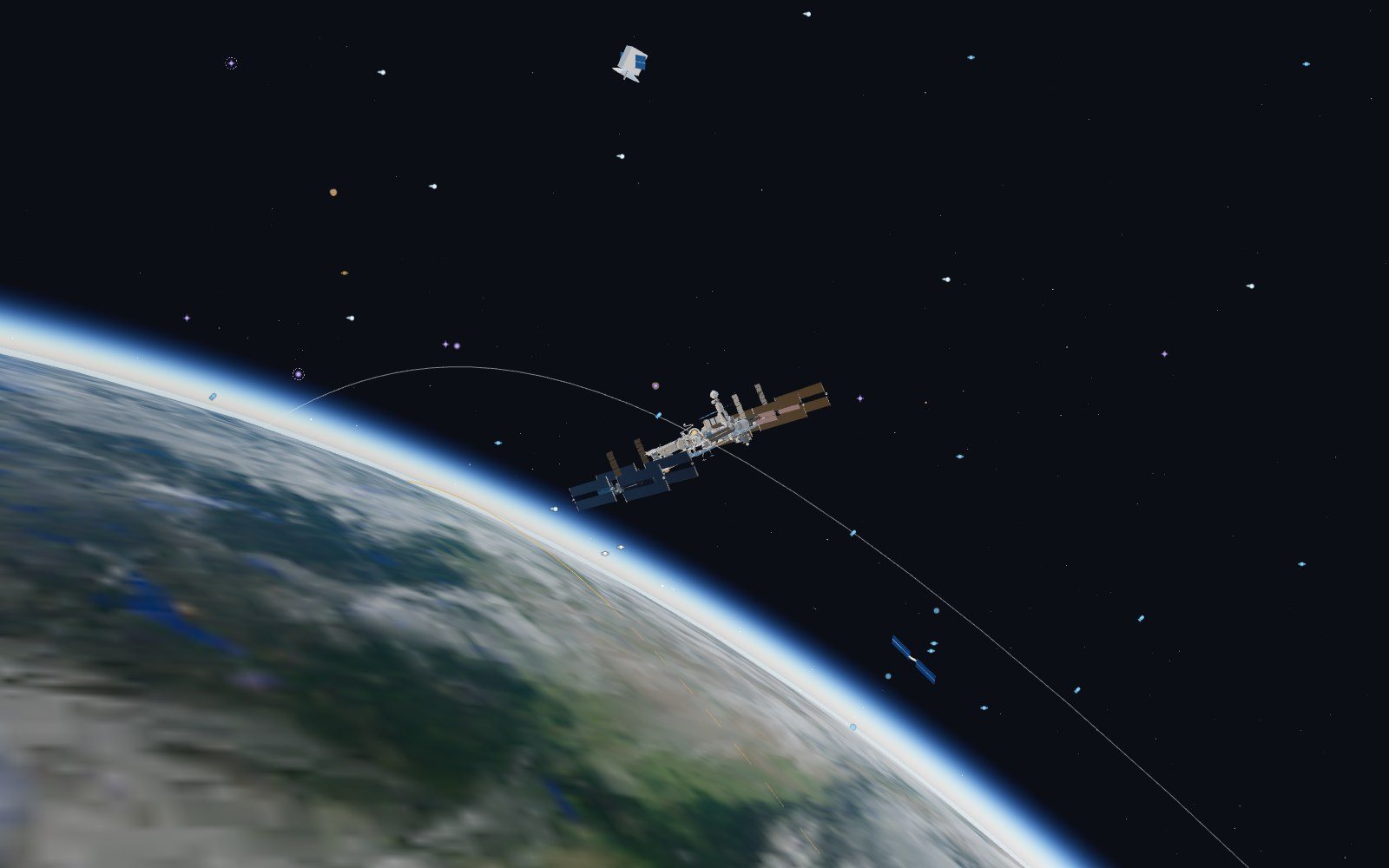
Where is the ISS right now? Two addresses in the sky
Ten people live off the planet this week, in exactly two homes. What their days are like, why the stations fly where they do, how to watch one cross your own street, and what happens when the bigger one comes down.
Space Radar Video: Narrated Flights to the Moon, Voyager 1 and TRAPPIST-1
video.spaceradar.ai is the new home of Space Radar’s wide films. It opens with the two longer films from the channel, each with its chapters, the full transcript and a player that loads nothing from YouTube until you press play.